Smith leatherback is an uncommon species in the leatherback genus. It is mainly distributed in India, Pakistan, Bangladesh and other places. Because of its scarcity, it has been listed as a Class 1 protected aquatic wildlife. Many people are very interested in the Smith Leatherback Turtle and want to know its related information. Today, I will share a relevant information about the Smith Leatherback Turtle, let's take a look!
One 、Basic information
Chinese name: Smith leatherback turtle
Binary name: Pangshura smithii
English name: brown roofed turtle
Kingdom: Animalia
Department: Chordate
Subphylum: Vertebrate subphylum
Class: Reptiles
Order: Turtles
Suborder: Suborder Turtles
Family: Turtles
Genus: Little Leatherback
Species: Smith's leatherback
II. Appearance characteristics
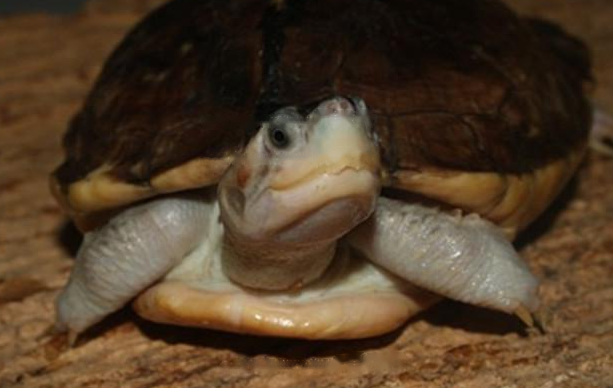
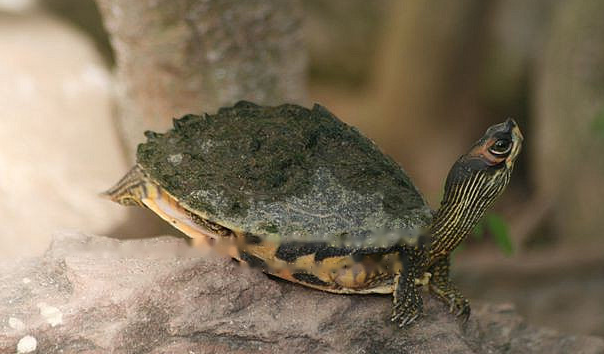
Eyes: Smith's leatherback has slightly blue eyes, A pair of erythematous spots on the posterior side of the head;
Head: Smith's Ridgeback with a light red stripe on both sides of the glans from mouth to neck;
Carapace: Smith's Ridgeback There is a black stripe on the midline of the carapace, and the carapace has a slightly olive-brown background;
Plastron: The Smith leatherback plastron has a yellow background and black patches ;
Foot: Smith leatherback turtle has five claws on the front toe;
Three, male and female identification
Smith leatherback turtle The reproductive organs are all wrapped in their own bodies, and it is difficult to distinguish male and female from the appearance. However, there is a little trick, which is to distinguish by the mating posture of Smith leatherback turtles, because Smith leatherback turtles use the male-up and female-down posture when mating, which is rare in leatherback turtles;
four , Living habits
1. Environment: Smith leatherbacks like to inhabit lakes, ponds and canals. It likes warmth and is afraid of cold. When the temperature reaches 27-38 degrees Celsius, the activity frequency is high. When the temperature is about 10 degrees Celsius, the Smith Leatherback will begin to hibernate;
2, Diet: Smith leatherbacks like to start eating when the temperature is around 30 degrees Celsius, so the best time for Smith leatherbacks to eat is from April to October each year. Smith leatherbacks are omnivores, and the general leatherback diet is partial, but Smith leatherbacks eat everything, any fish, shrimp, vegetable leaves, and water plants. Among them, Smith leatherbacks especially like It eats water hyacinth;
3. Habits: Like ordinary water turtles, Smith leatherback turtles like to sunbathe their backs very much, and their love for sunbathing is no less than that of Brazilian turtles. If there is no tanned area, the skin will appear rotten. However, as long as this situation can be sunbaked in a dry area for a few days, it will gradually improve;
Okay, the above is the relevant introduction of the Smith Leatherback, if you want to know more More relevant information, continue to pay attention to this site!

![[Original] Sharing of popular science knowledge of ringed map turtles](/static/img/11249/11249_1.jpg)