The Costa Rican woodgrain turtle is a species of turtle with a bright appearance, and it is the focus of many small partners. However, do you know what to look out for when it comes to actual Costa Rican woodgrain turtles before raising them? Before going to the pet store, please read this article first~
Tips 1: Understanding the Costa Rican Wood Turtle
First of all, we need to understand the basic morphological characteristics of the Costa Rican Wood Turtle , be aware of it.
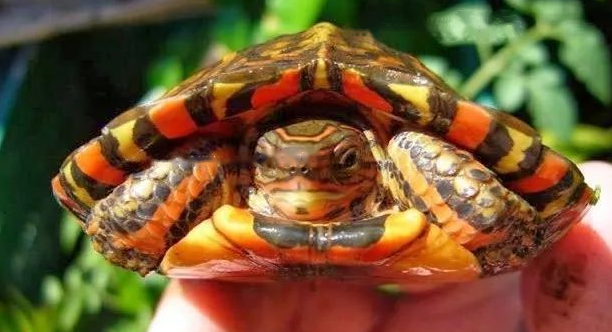
The carapace of the Costa Rican woodgrain turtle is light brown to dark brown, with a dome shape, black spots, stripes, and yellow, red, or green circles. In addition, its plastron is pale yellow, with a black vertical stripe along the middle seam and bifurcated front and rear.
Tips 2: See if they are healthy
Healthy pets are easy to keep. Everyone knows this truth~ So when choosing, we should pay attention to screening the common diseases of Costa Rican woodgrain turtles, So as not to buy unhealthy individuals.
1. Gastroenteritis: If there is a small amount of mucus in the stool or the stool is soft, green, yellow or dark green, then it is mostly gastroenteritis, and it is not recommended to buy.
2. Skin rot: The surface of the skin is damaged, festered and whitish, so it may have skin rot.
3. White eye disease: If the eyes are swollen and cannot be fully opened, and the outside of the eyeball is covered by white secretions, then it may have white eye disease.
4. Pneumonia: The Costa Rican woodgrain turtle with pneumonia has nasal discharge from its nose, loud breathing sounds, and white mucus around its mouth.

Trick 3: Look at the appearance
Pay attention to the appearance of the Costa Rican woodgrain turtle, and judge whether the individual in front of you is easy to feed from the perspectives of the shell, limbs, body size and activity level. .
1. Turtle shell: To select individuals with complete and brightly colored turtle shells, and individuals with obvious damage and cracks in their shells, it is not recommended to buy.
2. Limbs: Choose an individual with healthy limbs and no damage. If conditions permit, you can try to pull its limbs by hand to see if it can be retracted quickly. If possible, it is recommended to consider it first.
3. Body type: The larger or chubby-looking individuals in the same breeding box should be preferred, because such individuals can eat and have strong resistance, and are better able to support themselves after they are brought home.
4. Activity level: Healthy Costa Rican woodgrain turtles are more lively and will crawl around. Those who are huddled in their shells and do not like to move may be problematic and are not recommended to be considered.
That's all for today~Thank you for reading, and I hope this article can help you!

![[Original] Sharing of popular science knowledge of ringed map turtles](/static/img/11249/11249_1.jpg)