Next, let me introduce it to you from the following points, I hope you will like it!
I. Basic information
Chinese name: Galapagos tortoise, Pinta Island
Latin name: Chelonoidis abingdonii
English name: Pinta Giant Tortoise
Alternative names: Pinta Giant Tortoise, Abingdon Island Tortoise
Kingdom: Animal Kingdom
Department: Chordate
Subphylum: Vertebrate subphylum
Class: Reptiles
Subclass: Apocarpus
Order: Turtles
Suborder: Turtles
Family: Tortoise
Genus: Galapagos Tortoise
Species: Pinta Galapagos tortoise
Subspecies: no subspecies
II. Morphological characteristics
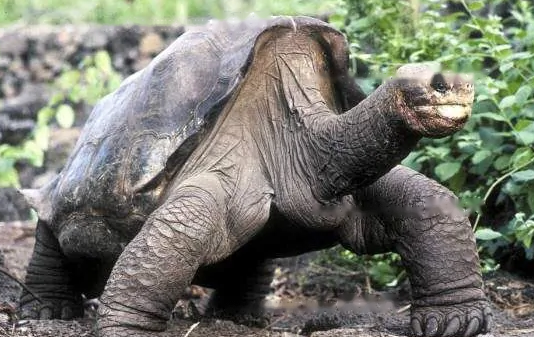
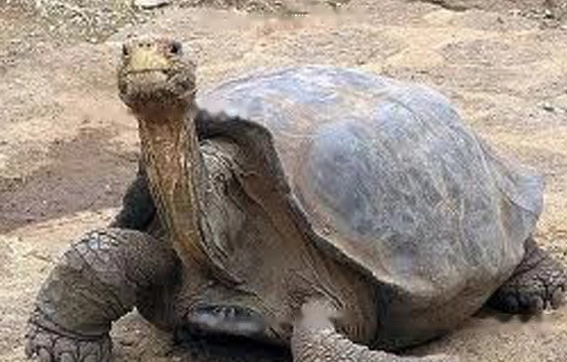
1. Body size: The body length of the Galapagos tortoise on Pinta Island is about 1.2 meters, and the male weight can reach 300 kilograms. It is the largest tortoise, with a large head and a long neck.
2. Carapace: The center is high and raised, with 5 vertebral shields, 4 costal shields on each side, and the front and rear edges are serrated and raised upward.
3. Color: The carapace, limbs, and head and tail of the Pinta Galapagos tortoise are khaki to blue-black, and some individuals have irregular dark spots and wrinkled skin.
III. Living habits
1. Activity time: Galapagos tortoises on Pinta Island are warm-blooded animals and need to absorb the heat of the sun. It takes 1-2 hours to dry and 8-9 hours to forage. Most will walk in the morning and rest in the evening.
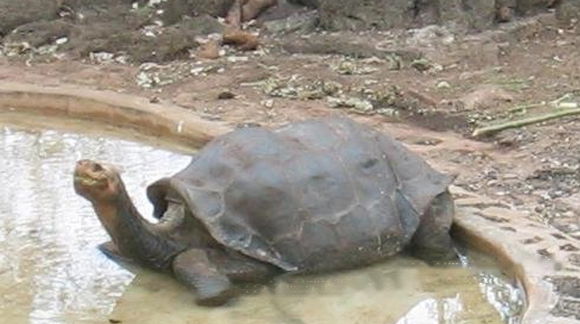
2. Rest mode: May roll in the mud formed by the rain on cool nights to protect the body from mosquito bites.
3. Eating habits: Galapagos tortoises on Pinta Island are herbivores, eating things including Galapagos cacti, grass, leaves, etc., and records that they will eat Guava. Their body's water intake comes mainly from dew and sap from plants, especially cacti.
4. Distribution range
Only distributed in Abingdon Island, also known as Pinta Island, in the Galapagos Islands of Ecuador, South America.
V. Conservation level
Included in the 2016 IUCN Red List of Threatened Species ver 3.1 - Extinct (ex).
6. Related reports
On June 24, 2012, the death of Lonely George The only surviving member of the Tower Island Galapagos tortoise, whose death officially made the species extinct.
It was first seen on Pinta Island in the Galapagos Islands in 1974, and it soon became a symbol of animal protection on the islands. None of their eggs hatched and ended up dying at the Santa Cruz Center Breeding and Feeding Station at the Galapagos National Park Service.
There are so many related introductions about the Galapagos tortoise on Pinta Island. If you have any questions, welcome to leave a message. There are more interesting content can pay attention to this site.

![[Original] Sharing of popular science knowledge of ringed map turtles](/static/img/11249/11249_1.jpg)