Pan's box turtle has a docile temperament, does not like to fight, and has a very obvious beauty character on its plastron, so it is called beauty turtle by many people . However, the number of Pan's box turtles is not large, and they are not allowed to be kept as pets, so many people do not know about them. The following editor will give you some popular science.
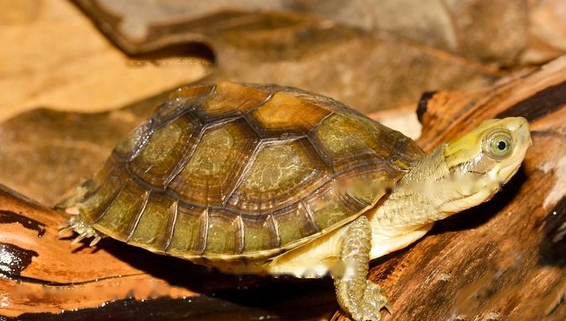
1. Morphological characteristics
1. Body size
The body is small, the carapace is 115-120 mm long and 81-86 mm wide mm, shell height 37-40 mm.
2. Head
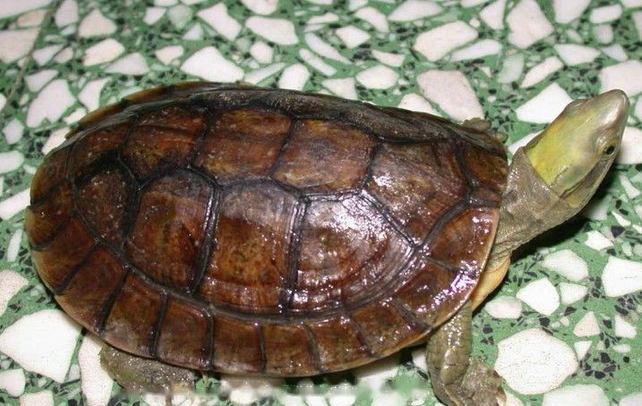
The head is narrow and long, 32-33 mm long, 18 mm wide and 16 mm high, with smooth skin on the back of the head. The snout is long, protruding from the upper jaw, and the upper jaw is slightly hooked; the nostrils open at the tip of the snout. The orbit is large, the diameter of the orbit is 8-8.5 mm × 7.5 mm, about the same as the length of the snout, and the tympanic membrane is obvious.
3. Carapace
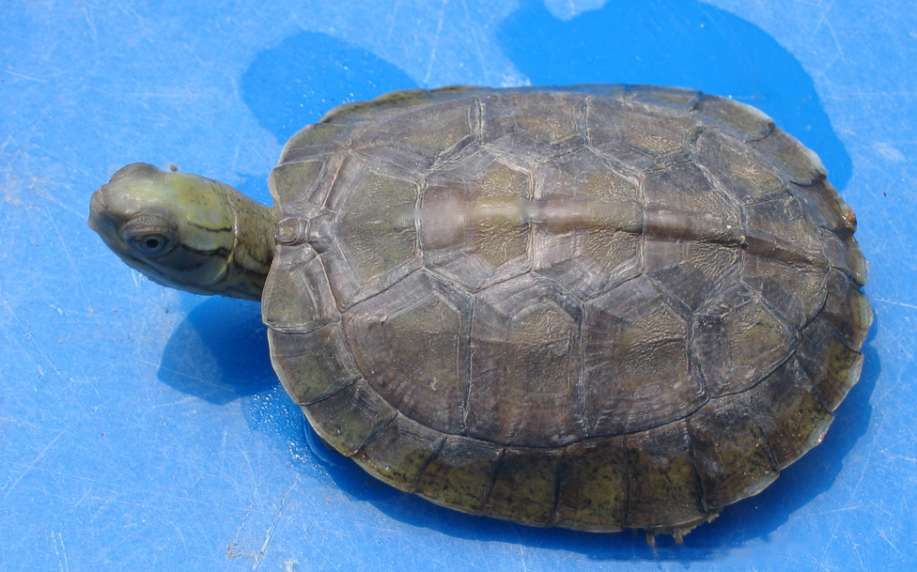
The carapace is low and flat, long oval, with rounded anterior and posterior margins. There are ridges, but no lateral ribs; the cervical shield is long and narrow, elongated or inverted bell-shaped; 5 vertebral shields, all of which are wider than long, the first vertebral shield is pentagon, the center of the front edge is prominent, and the rest are six edge. There are 4 pairs of rib shields and 12 pairs of edge shields, all of which are concentric. The outer edges of the third to seventh, ninth and tenth shields are slightly turned up. The plastron is oval, with rounded anterior margin and concave posterior margin. The laryngeal shield suture is 1.5 times the length of the humeral shield suture, and the length of each shield suture in the abdomen is as follows: thoracic shield suture abdominal shield suture anal shield suture laryngeal shield suture humeral shield suture (femoral shield suture) femoral shield suture suture (humeral shield suture).
4. Body color
The back of the head is yellow-olive, the side of the head is dark gray, and there are 3 brown stripes behind the eyes, one is horizontal and backward from the corner of the mouth, and the second is The third line runs from the back of the eye through the upper tympanic membrane to the neck. The tympanic membrane is pale gray, and the lower beak and throat are grayish yellow. The carapace is light brown, the plastron and the ventral surface of the scutellum are yellow, and the scutellum on the abdomen is accompanied by wide black stripes. The nape, limbs and tail are gray-brown, and the ventral complexion is pale. The rest of the soft parts of the body are yellow. Claws brown with yellow tips.
2. Living habits
Pan's box turtle is an aquatic turtle, living in mountain streams, rock crevices and gentle water flow in hilly areas. The river with clear water. For carnivorous turtles, under artificial feeding conditions, feed on insects, small fish, small shrimp, earthworms, livestock and poultry viscera, etc. When the temperature is 20 °C, you can eat normally, and the most suitable temperature is 22-30 °C. When the temperature is around 15 °C, you will stop eating or eat less, and enter the hibernation state below 10 °C. The hibernation period is from November to early April of the following year. The hibernation period in southern China is shorter, usually from December to February of the following year.
Three. Breeding
The spawning period is from July to August every year. The eggs are oval, 1-9 eggs are laid each time, and the eggs can be laid in batches . The eggs weigh 10-20 grams, the average long diameter of the eggs is 35-45 mm, and the average short diameter of the eggs is 18-25 mm.
Okay, the above is all the introduction about Pan's box turtle. Interested friends can learn more about it.

![[Original] Sharing of popular science knowledge of ringed map turtles](/static/img/11249/11249_1.jpg)