The ground turtle is a semi-aquatic turtle that lives in water with relatively fresh water all year round. It also has a name called Ganoderma lucidum turtle, why? Because it is still a high-grade tonic and precious medicinal material, it has extremely high medicinal value and is very expensive. Many people think that the nutritional value of the tortoise is not inferior to that of Ganoderma lucidum.
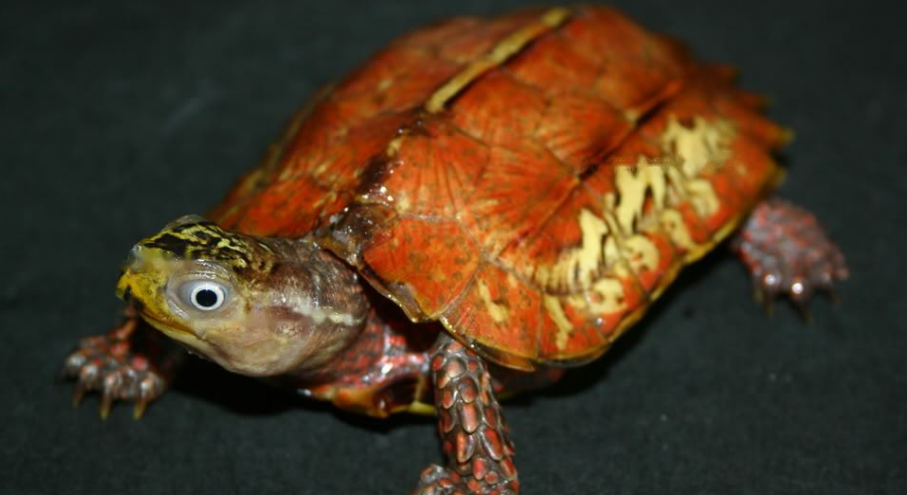
However, due to the high medicinal value of the tortoise, it has been captured and injured by humans, resulting in a very small number of it now and is currently facing the risk of being endangered. More friends know about the tortoise, so the editor will share a popular science article about the tortoise today, please be sure to read it!
I. Basic information
Chinese name: Earth turtle
Latin name: Geoemyda spengleri
Nicknames: Golden Turtle, Dodecagonal Turtle, Maple Leaf Turtle, Black-breasted Leaf Turtle, Dodecagonal Turtle Subphylum: Vertebrates
Class: Reptiles
Subclass: Turtles
Order: Turtles
Suborder: Subterranean Turtles
Family: Turtles
Subfamily: Freshwater Turtles
Genus: Turtles
Species: Turtle
Subspecies: None
Name and Year: Gmelin, 1789
English Name: Black-breasted Leaf Turtle, lack-breasted Leaf Turtle
Second, body type characteristics
Body type: The body type is considered a medium type among ordinary turtles.
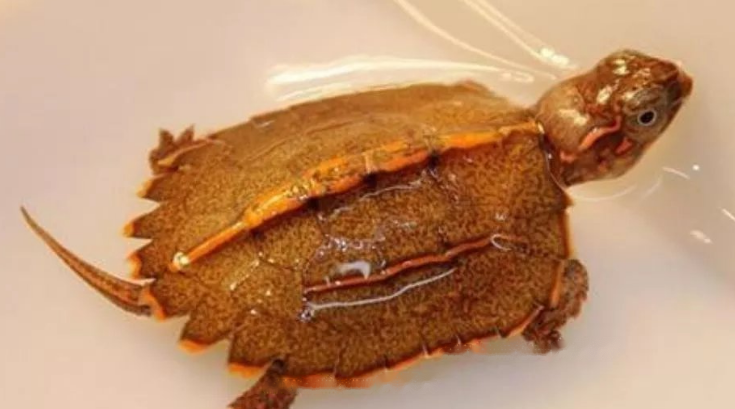
Carapace: Male carapace is different in length from female carapace, male carapace is 90-101 mm long, female carapace is 87-114 mm long, carapace is flat, front and rear edges are serrated Yes, there are 3 longitudinal edges, very obvious.
Head: The head is relatively small among common turtles, with a smooth top and no scales.
Mouth: The mouth is pointed and narrow, not protruding from the lower jaw, and the outer side is straight down.
Neck shield: The neck shield is large, bell-shaped, longer than wide.
Foot: The feet are slender and have no fins.
Tail: Males and females have different tails. Males have thicker and longer tails, while females have shorter ones. There are about 8-17 pairs of regular flat rectangular scales on the back of the tail, forming 2 vertical rows.
III. Living habits
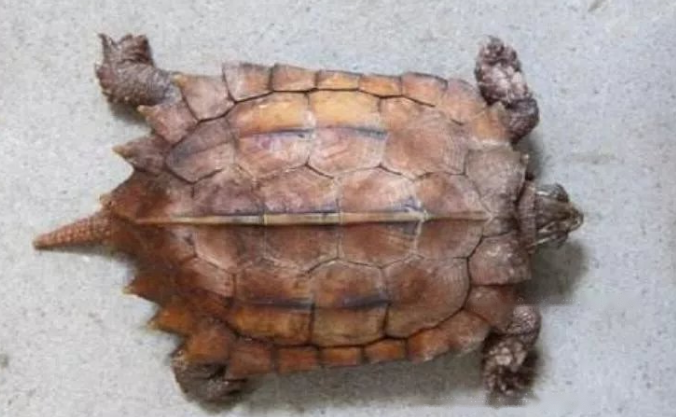
Residential address: Often inhabits the mountains and jungles near streams at an altitude of about 700 meters in the shade and dampness In areas where it is terrestrial and semi-aquatic, it cannot enter deep waters.
Food characteristics: It is an omnivorous animal, usually feeding on some insects, worms, leaves and fruits of plants, etc., the food intake is relatively small, so the growth is relatively slow.
Reproduction: Oviparous animals, when their body weight reaches about 250 grams, their gonads begin to mature and become fertile. They start mating and reproduction every year from September to October, and then start to lay eggs in June of the second year. , there are only 2-6 eggs per spawn, but it can spawn 2-3 times per season. After laying eggs, the female turtle will begin to hatch the eggs, and the incubation period is about 65-75 days.
IV. Distribution range
The main distribution areas of the tortoise are China and Vietnam. In China, it is common in Hunan, Guangdong, Hainan and other places, all of which are places with relatively warm climates.
This is the end of the popular science about earth turtles. I hope you don't hurt them again after understanding them.

![[Original] Sharing of popular science knowledge of ringed map turtles](/static/img/11249/11249_1.jpg)