The soft-shelled turtle, also known as soft-shelled turtle, is a delicacy that often appears on our dining table, and it also has very high nutritional value. Today, the Yellow River soft-shelled turtle that I want to introduce to you is one of them.
The Yellow River soft-shelled turtle, native to China and with a long history, is the main species of soft-shelled turtle cultured in northern my country. They have the characteristics of tenacious vitality, high reproduction rate and fast growth rate, so they are very popular among farmers.
I. Basic information
Chinese name: Yellow River soft-shelled turtle
Alias: Yellow River mouth soft-shelled turtle, three yellow soft-shell turtle
door: notochord Zoology
Subphylum: Vertebrate Subphylum
Class: Reptiles
Subclass: Apoporeae
Order: Turtles Order
Suborder: Retort suborder
Family: Turtle family
Distribution area: Yellow River Basin and northern and central saline-alkali regions of China
Second, body characteristics
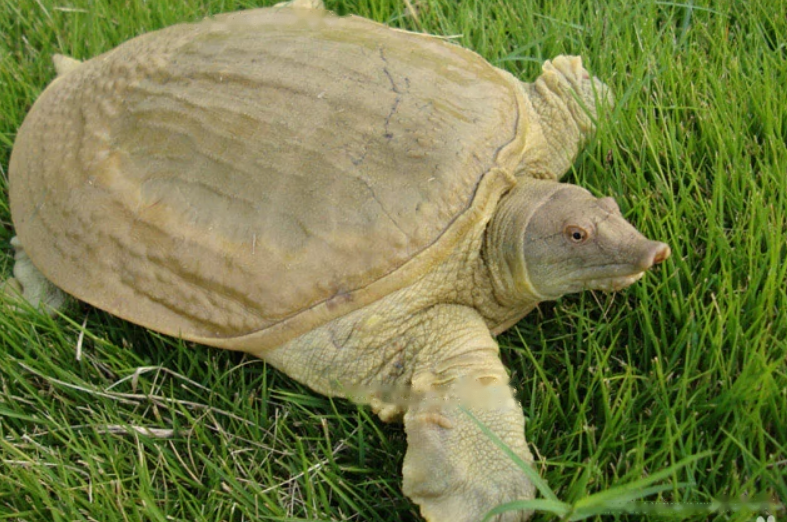
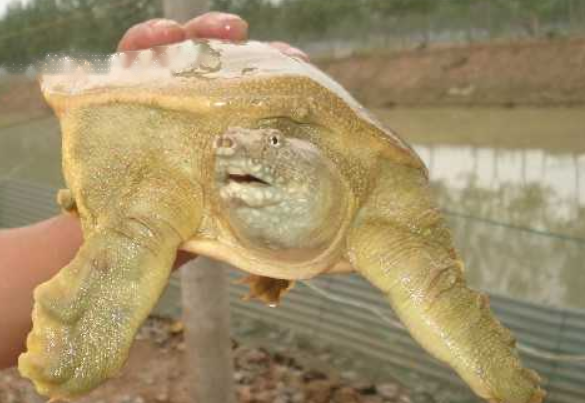
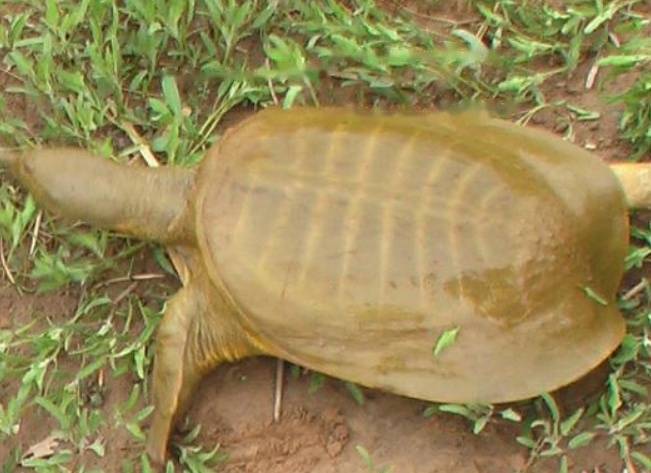
1. Body type: The body is flat, oval, and the overall skin is very soft.
2. Head: The head is thick and the front is triangular; the snout is elongated and tubular; the eyes are small, on both sides of the back of the nostrils.
3. Neck: The neck is thick and long, cylindrical, flexible and flexible.
4. Carapace: There is hypertrophic connective tissue around the carapace, also known as skirt. The meat here is delicious and nutritious, and it is a favorite part of people.
5. Limbs: The limbs are flat, with 5 toes on the forelegs and hind limbs, with webs between the toes. The inner 3 toes have sharp claws, and the limbs can be freely retracted in the carapace.
6. Body color: The carapace is yellow-green, the plastron is yellow, and even the turtle oil is yellow, so the Yellow River turtle is also known as the three-yellow turtle.
III. Value
1. Medicinal value
The Yellow River soft-shelled turtle is a good food for nourishment. Their meat is rich in nutrients and rich in calcium and phosphorus , iron, thiamine, vitamin A and other nutrients. Not only that, the Yellow River soft-shelled turtle is also a very precious medicinal material, and all parts of its body can be used as medicine to treat various diseases.
2. Economic value
With the increasing demand for Yellow River soft-shelled turtles in the domestic market, more and more people began to breed them. This not only accelerated the artificial breeding and breeding of the Yellow River soft-shelled turtle, but also accelerated the local economic development.
IV. Instructions for Breeding
The growth and development of the Yellow River soft-shelled turtle can generally be divided into three stages: juvenile soft-shelled turtle, juvenile soft-shelled turtle and adult soft-shelled turtle. The feeding methods at different growth stages are also different. And because they have cannibalistic habits, they need to be kept in separate pools.
In addition, the dietary habits of the Yellow River soft-shelled turtle at different stages also need attention. Juvenile soft-shelled turtles have high requirements for food, and should choose foods with comprehensive nutrition and good palatability, such as red worms, mys shrimp, chicken, duck egg yolk, etc. The food requirements of young turtles are not as high as that of juvenile turtles, but they have a large demand for food and can be fed 2 to 3 times a day. The feeding method, quantity, frequency and type of the adult soft-shelled turtle are basically the same as those of the young soft-shelled turtle.
Okay, the above is a brief introduction to the Yellow River soft-shelled turtle. I hope everyone can understand them before eating the Yellow River soft-shelled turtle.

![[Original] Sharing of popular science knowledge of ringed map turtles](/static/img/11249/11249_1.jpg)