1. Basic information
1. Chinese name: mouse snake
2. Latin name: Ptyas mucosus
3. Jie : Animalia
4, Door: Chordate
5, Subphylum: Vertebrate Subphylum
6, Class: Reptile
7. Subclass: Biporia
8. Order: Snake
9. Suborder: Neospermia
10. Family: You Snake family
11. Genus: Rat Snake
12. Distribution area: India, Afghanistan, Indonesia, Indo-China Peninsula, and all provinces south of the Yangtze River in China
13. Species named by: Linnaeus, 1758
14. Habitat: plains, hilly areas or mountains with an altitude of more than 2000 meters
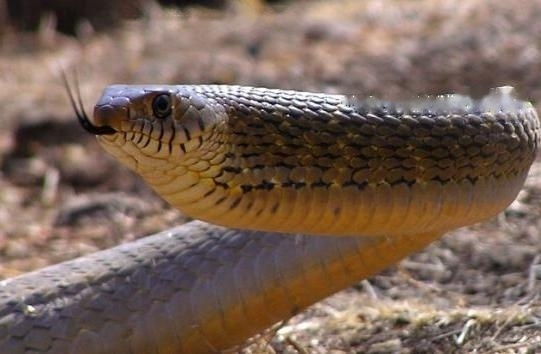
2. Morphological characteristics
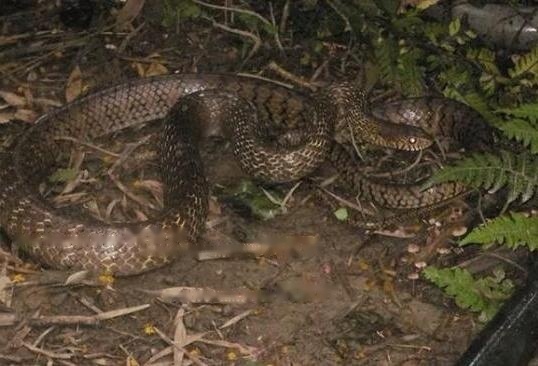
1. Overall : The snake body is long and thick, the length of the adult snake body is generally 150cm~200cm, and the weight can reach more than 10 kg.
2. Head: The head is long and the eyes are big and round.
3. Color: The head is dark brown; the eyes are olive green; the lip scales are light gray; the back of the snake body is yellow-brown, and there are irregular black reticulate or horizontal stripes behind the body, which are always Extends to tail; ventral surface is yellowish-white, and posterior margins of ventral and subcaudal scales are black or yellowish-white.
3. Living habits
1. Activities: Whether it is day or night, mouse snakes like to come out and do activities.
2. Food: Mice and snakes have a very mixed diet. Fish, frogs, rodents, toads, lizards, and even snakes can become their food. Among them, the favorite food of mouse snakes is rats. As long as they see a rat, they will attack quickly. If the rat escapes into the cave, they will also enter the cave to catch them. If the cave is too small to enter, It will wait at the entrance of the cave until the mouse is caught, very persistent.
3. Hibernation: The mouse snake will hibernate from November to March of the following year.
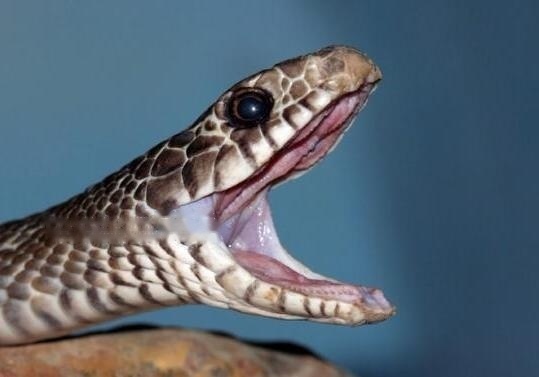
Four. Breeding Method
The mouse snake generally lays eggs from May to July every year, and the number of eggs is about 7 to 15. After that, the female snake will coil on the eggs to protect and hatch. The incubation period is about 50-70 days.
The little knowledge about mouse and snake science is shared by the editor. If you have anything to say, you can leave a message below. Finally, a friendly reminder: Wild mouse snakes belong to the second-level national key protected animals. It is illegal to hunt, kill, buy and sell them. Remember!

![[Original] Sharing of popular science knowledge of ringed map turtles](/static/img/11249/11249_1.jpg)