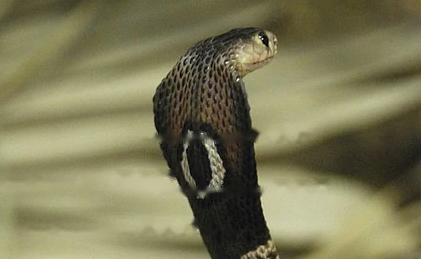
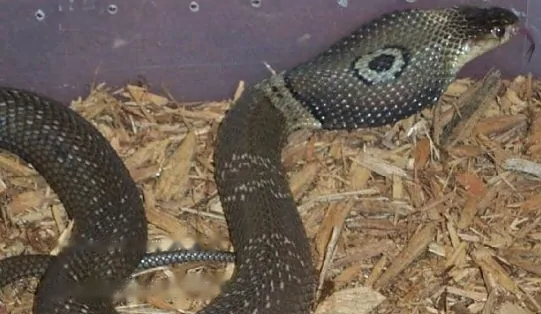
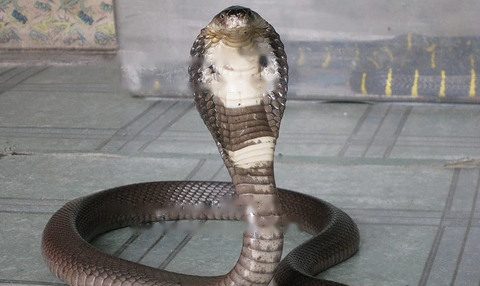
The Bengal cobra is also known as the monocobra because when threatened, it often erects its front body and expands its neck, at which point the back shows the shape of a single ring of spectacles.
So today, the editor will give you some popular information about it. Let's take a look~
1. Basic information
[Chinese name] Bengal cobra
[Latin name] Naja kaouthia
[Another name] Taiwan, Monocobra
[Kingdom] Animalia
[Gate] Chordate
[Class] Reptiles
[Order] Squamata
[Family] Cobraidae
[Subfamily] Cobra subfamily
[Genus] Cobra
[Species] Bengal cobra
[Named by]Lesson
[Named] 1831
II. Main distribution
The Bengal cobra is widely distributed, both at home and abroad. Abroad, it is mainly distributed in India, Bangladesh, Nepal, Thailand, Vietnam, Cambodia and Laos; in China, it is mainly distributed in Guangxi and Sichuan.
III. Appearance characteristics
The Bengal cobra is large and sturdy. The body length is generally about 1.5 meters, and the longest can reach 2 meters. The head is oval; the back is dark brown or gray-brown; the abdomen is yellow-white; no cheek scales.
V. Habits
1. Habitat
Cobra Bengal mainly lives in plains, hills and mountainous areas, and usually likes to stay in low forests, creeks, ravines, etc. Bushes, bamboo forests and weeds.
2. Eating habits
The Bengal cobra is a carnivore and mainly eats some rodents, frogs and small vertebrates.
3. Reproduction
The reproduction method of Bengal cobra is oviparous. The spawning time of female snakes is from June to August each year, and they can lay 10-18 eggs at a time. The hatching time of the eggs is around 50 days.
V. Toxicity
The Bengal cobra is highly toxic, and its toxins contain strong neurotoxins and cytotoxins. Once bitten by it, there will be pain and local swelling, which can be life-threatening in severe cases.
VI. Protection level
Because of mass hunting by humans, the number of Bengal cobras is gradually decreasing, and has been recorded in many protection lists. As follows:
1. The Convention on International Trade in Endangered Species of Wild Fauna and Flora (CITES Appendix II).
2. International Union for Conservation of Nature (IUCN), as a non-hazardous level.
OK Now, that's all about the Bengal Cobra! Do you guys understand?

![[Original] Sharing of popular science knowledge of ringed map turtles](/static/img/11249/11249_1.jpg)