The term Tugong snake is generally referred to as a pit viper. It is a small venomous snake under the genus Viperidae of the suborder Viperidae. Tugong snakes are not unique to my country, they are also widely distributed in American countries. Today, let Xiaobian introduce you to the Tugong snake in detail!
I. Basic information
[Chinese name] Tugong snake
[Alias] pit viper, soil pit viper, Tufu snake, Tuba snake, etc.
【Latin name】Gloydius brevicaudus siniticus
【Kingdom】Animal Kingdom
【Domain】Chordates
【Subphylum】Vertebrate subphylum
[Class] Reptiles
[Order] Squamata
[Suborder] Snakes
[Family] Viper Snake
[Subfamily] Pitviidae
[Genus] Pitviper
[Species] Pitviper
2. Morphological characteristics
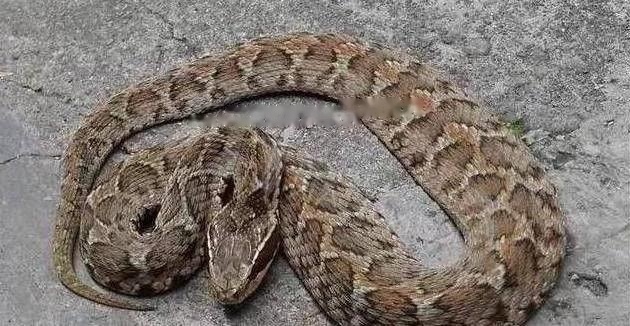
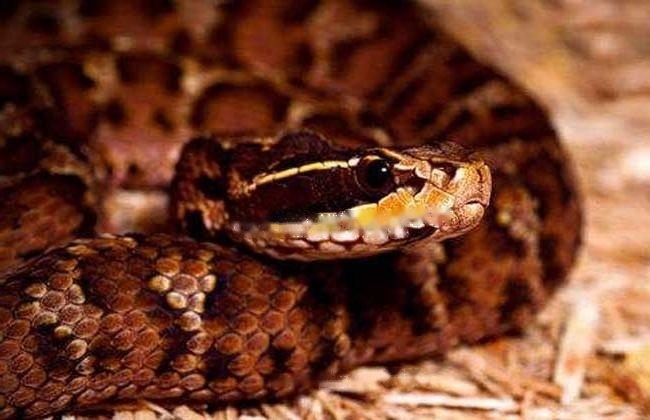
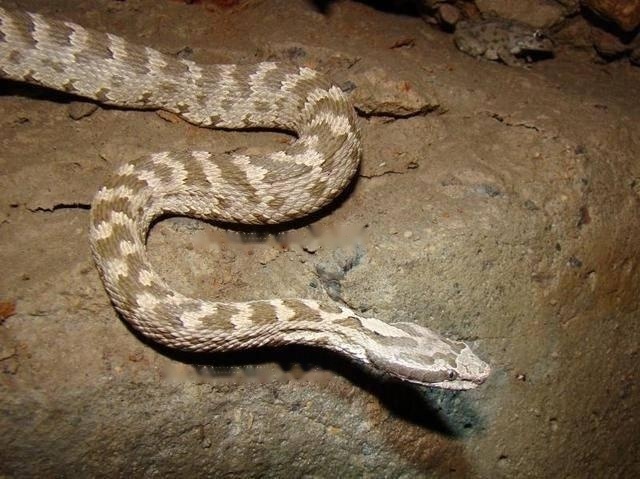
The body of Tugong snake is 60-70 cm long, the head is slightly long triangle, the back is gray-brown to brown, and there is a dark ∧-shaped spot on the back of the head, mixed with Dark spots. There are large symmetrical scales on the back of the head, cheek sockets in front of the eyes, and two longitudinal round spots on the back of the body. Body color changes greatly, the back of the head and body is from gray-brown to earthy red, the head has a black band from the back of the eyes to the corner of the mouth, and there is a yellow-white fine line on the upper edge; the back of the body is alternately arranged with black-brown round spots; the ventral surface is gray-white to gray Black-brown with irregular black spots; tail tip black.
3. Habitat environment
The main habitats of the Tugong snake include plains, hills, low mountains, or under the rocks in the fields and creeks or in the grass, because the Tugong snake can land and water parallel, so their colonies tend to be close to water sources.
IV. Living habits
The reproduction, feeding and activities of Tugong snake are all restricted by temperature. No predation; hibernation below 5°C; peak predation at 20°C to 25°C; snake holes above 30°C to inhabit, generally do not prey. Nocturnal activities are frequent, and after the warm spring comes out to look for food. Fish, frogs, lizards, snakes, birds, and rats are the staple food of Tugong snakes. Tugong snake is one of the most widely distributed venomous snakes in my country, among which it is the most harmful to parts of Jiangsu and Zhejiang provinces, and is a high-incidence area of Tugong snake bites. The venom of Tugong snake contains mixed venom. After biting the human skin, injecting toxin will cause local and systemic reactions and even respiratory distress, rapid pulse, oliguria or anuria and other symptoms and death.
V. Protection level
Tugong snake has been listed in the National Protection of Beneficial or Important Economic, The list of terrestrial wildlife of scientific research value, and they are also included in the World Conservation Union (IUCN) 2013 Red List of Threatened Species ver3.1 - Near Threatened (NT), listed in China's Biodiversity Red List Inventory - Vertebrate Volume, assessed as Vulnerable (VU). It can be seen that this kind of highly venomous snakes that exists widely in my country and the Americas is actually very scarce.
The above is the popular science knowledge about Tugong snake (pit viper), welcome to leave a message below for discussion, and friends who want to know more about snakes, or other animals and pets, can also continue to pay attention This site~

![[Original] Sharing of popular science knowledge of ringed map turtles](/static/img/11249/11249_1.jpg)