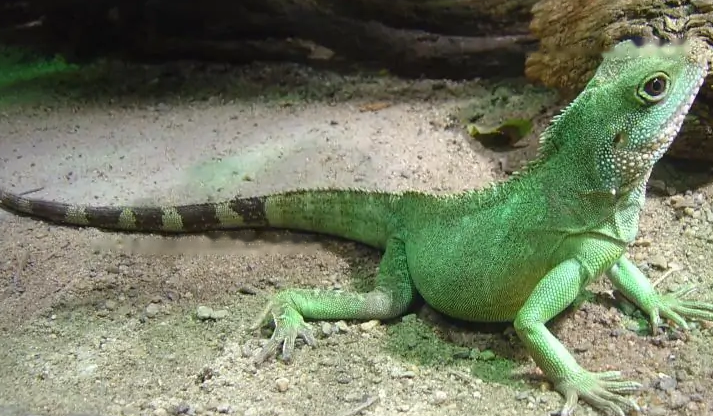
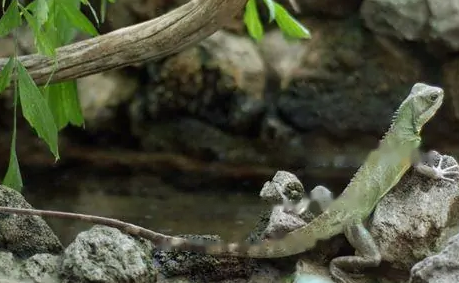
The long iguana is also known as a water dragon because it prefers to stay on trees, rocky rivers, and branches near the edge of ditches. It crawls quickly and is good at swimming. Having said that, are you curious about it?
Then, the editor will give you some popular information about it. Let's take a look~
I. Basic information
【Chinese name】Long iguana
【Latin name】Physignathus cocincinus
【English name】 Long rock agama, Chinese Water Dragon
【Kingdom】Animal Kingdom
【Domain】Chordates
【Subphylum】Vertebrate Subphylum
[Class] Reptiles
[Subclass] Biporia
[Order] Squamata
[Suborder] Lizardia
【Family】Iguana
【Genus】Longiguana
【Species】Longiguana
【Named by】 Cuvier
[named time] 1829
II. Main distribution
The long iguana has a wide distribution range, both at home and abroad. All have. Abroad, it is mainly distributed in Cambodia, Laos, Thailand and Vietnam; in China, it is mainly distributed in Guangdong, Guangxi and Yunnan.
III. Appearance characteristics
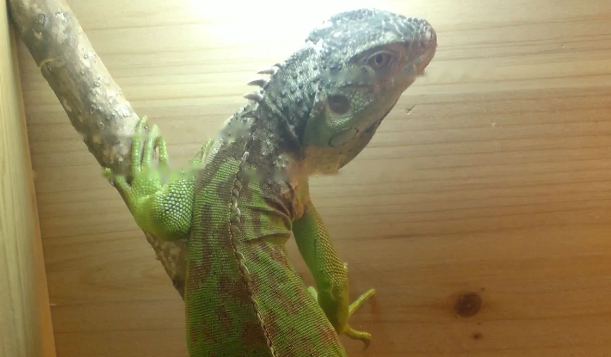
The back of the long iguana body is generally dark green; the abdomen is earthy red; the rear of the tail is yellow-green; There are light green or light yellow markings on both sides of the tail; the jaw margin is light brownish yellow; the throat is brownish red.
The head is a quadrangular pyramid, longer than it is wide; the snout is blunt; the nostrils are located in the center of the nasal scale; the eyes and tympanic membrane are large; the limbs are well developed, especially the hind limbs.
PS: The body color of the long iguana varies with the environment.
4. Habits
1. Eating habits
The iguana is a carnivorous omnivorous animal, mainly eating some insects, snails, fish and shrimp, and sometimes some plants.
2. Breeding method
The breeding method of long iguana is oviparous. The spawning time of female lizards is from March to July every year. They can lay 2-3 broods a year, and each brood has 7-18 white oval eggs.
V. Population Status
The long iguana is a protected animal and has been recorded in a number of protected lists, as follows:
1. World Conservation Union Red List of Threatened Species (IUCN 2017), as vulnerable.
2. List of Terrestrial Wild Animals Protected by the State that are Beneficial or Have Important Economic and Scientific Research Value issued by the State Forestry Administration of China on August 1, 2000.
3. China Biodiversity Red List (Reptiles), endangered.
4. China's Red Book of Endangered Animals is endangered.
5. List of Key Protected Wild Animals in Guangdong and Yunnan Provinces of China.
6. China's National Key Protected Wildlife List is a second-class protected animal.
Okay, the long iguana The introduction, the editor will stop here! Do you guys understand? If you have anything to say, please leave a message in the comment area~

![[Original] Sharing of popular science knowledge of ringed map turtles](/static/img/11249/11249_1.jpg)