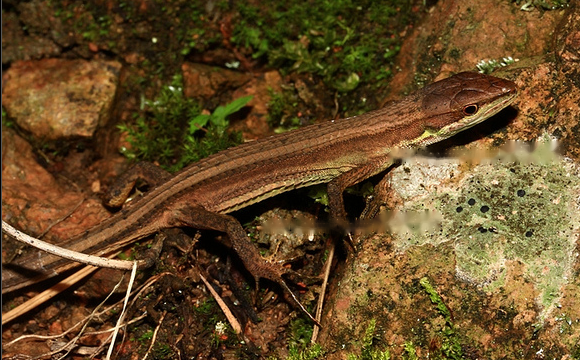
Next, let us briefly understand the white-striped grass lizard.
I. Basic information
【Chinese name】White-striped grass lizard
【Latin name】Takydromus wolteri
【Alias】Mashezi
【Kingdom】Animal Kingdom
【Domain】Chordates
【Subphylum】Vertebrate Subphylum
【Class】Reptiles
【Order】 Lizards
【Family】Lizardidae
【Genus】Lizardus
[Species] White-striped Lizard
[Name and Date] Fischer, 1885
II. Morphological Characteristics
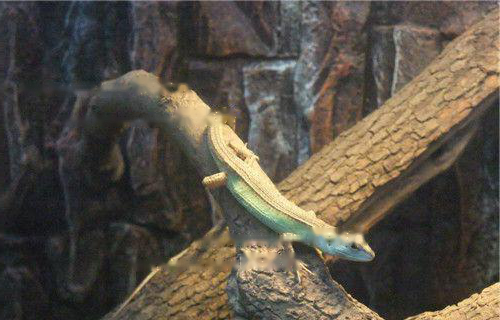
1. Body shape: The white-striped grass lizard is round, long and slightly flat. The head and body are 38-66 (average 50.5) mm long; the tail length is 45-130 (average 94.52) mm, and the average tail length is 2 times the length of the head and body Left and right
2. Features: The snout scales of the white-striped grass lizard are wider than high, the middle of the front ridge is prominent, and it is connected with the nose scales and the frontal nose scales. The dorsal scales are larger and have strong ridges.
3. Body color: The body color of the white-striped grass lizard varies greatly, such as gray-brown, light gray, khaki, brown-gray or black-brown. Abdomen greyish white.
3. Living habits
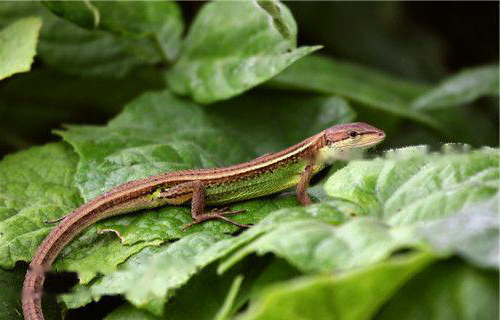
1. Habitat: The white-striped grass lizard mostly inhabits barren hills and shrubs, the edge of weeds, hillsides, fields, etc. It is good at climbing grass and trees, and often hunts and rests on grass or trees.
2. Diet: The white-striped grass lizard has a wide diet, feeding on moths, spiders, snails, locusts and insect larvae. When it finds food, it raises its head and stares, then swoops and bites the near-head end of the food, bites several times in a row, and swallows the food after death.
IV. Protection level
The white-striped grass lizard has been included in the Three Possibilities list issued by the State Forestry Administration of China.
The above is all about the sail lizard, thank you for watching.

![[Original] Sharing of popular science knowledge of ringed map turtles](/static/img/11249/11249_1.jpg)