I. Basic information
Chinese name: Alligator
Scientific name: Osteolaemus tetraspis Cope
Kingdom: Animalia
phylum: Chordate
Class: Reptiles
Subclass: Biporia
Order: Crocodiles
Family : Alligatoridae
Genus: Alligator
Species: A. mississippiensis, Chinese alligator (A. sinensis)
Distribution : China, United States
II. Morphological characteristics
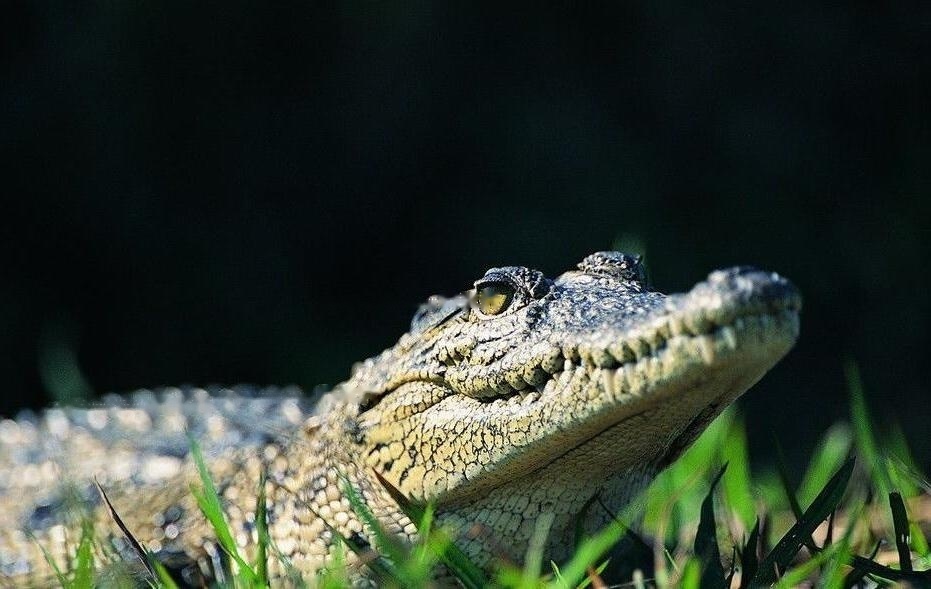
American alligators are generally about 1.8 to 2.7 meters long, and according to the Everglades National Park website That said, the largest alligator found in Florida is 5.3 meters long, while the largest American alligator is found in Wetlands Island and Louisiana, north of the Lake Washington Botanical Gardens, at 5.8 meters long. A few large samples have been overweight, the largest can weigh more than 1 ton. In August 2014, a giant alligator weighing 1,011.5 pounds and 15 feet long was caught in the United States.
The Chinese alligator is 1-2m long, with a flat head, prominent snout, stubby limbs, 5 forelimbs, 4 hind limbs, webbed between the toes, very agile for crawling and swimming. The tail is long and flat, strong and powerful, it can propel the body forward in the water, and it is also a weapon of attack and self-defense. They have relatively large heads, more granular and banded scales on their scales, and earth-colored eyes. Weight is about 36 kg. Their heads are relatively large and their scales are more grainy and banded. Chinese alligator scales are similar in nature to dermal scales, and the way they form is similar to what occurs in bird feathers.
III. Living habits
Large male alligators are non-social and have the concept of territory, and will attack other crocodiles that invade the territory. Smaller alligators gather in large numbers. And the largest species of alligator, both male and female, defend top-tier territory; smaller alligators are more tolerant than other alligators of the same size. Alligators dig burrows to escape danger and hibernate. Alligators mainly prey on small animals that can be eaten in one bite. But they also prey on larger animals by grabbing their prey and then pushing it into the water until it drowns. And those that cannot be eaten in one bite, they will let their prey rot, or roughly rotate and shake the prey until it is torn into bite-sized pieces, which is deadly shake.
As an ancient reptile, alligators are rare in number and are on the verge of extinction. In my country, Chinese alligator has long been listed as a national first-class protected animal, and it is strictly prohibited to hunt and kill. It is expected that under the protection of national professionals, the number of alligators can grow sustainably~

![[Original] Sharing of popular science knowledge of ringed map turtles](/static/img/11249/11249_1.jpg)