I. Basic information
Chinese name: Red-backed squirrel monkey
Alternative name: Red-backed squirrel monkey
World : Animalia
Department: Chordate
Class: Mammalia
Order: Primates
Family: Capuchinidae
Genus: Squirrel monkey
Species: Red-backed squirrel monkey
II. Morphological characteristics
The adult red-backed squirrel monkey is 27-29 cm long, weighs 600-950 grams, and has a tail length of 36-39 cm. Males were on average 16% heavier than females, with males weighing an average of 829 grams and females weighing an average of 695 grams. They have the largest brain-to-body ratio of any primate, with a brain weighing about 25.7 grams or 4% of body weight. Their tails do not fully grasp things, but are mainly used for balance.
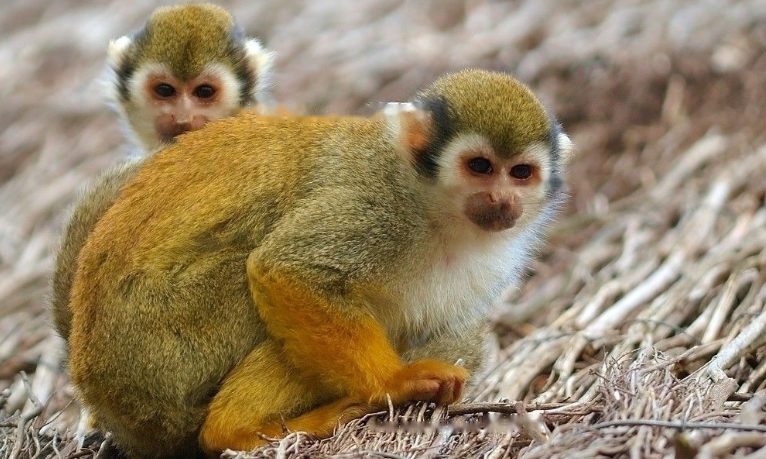
The red-backed squirrel monkey is colored differently from other South American squirrel monkeys. Their backs, hands, and feet are orange, their shoulders, rump, and tail are olive, their belly is white, and their caps and tail are black.
III. Living habits
The red-backed squirrel monkey is an omnivorous animal, mainly eating insects, spiders, fruits, leaves, bark, flowers and nectar , they also eat small vertebrates such as bats, birds, lizards and frogs.
The population of red-backed squirrel monkeys ranges from 20 to 75 individuals. They are the most equal of all monkeys, with females having no dominant structure and males fighting only during the breeding season. Females are sexually mature at 2.5 years old and males at 4-5 years old. Mature females leave their group, but males stay.
Because the red-backed squirrel monkeys have many natural enemies, it is difficult for them to survive in higher and mature forests, and can only inhabit the secondary forests of lowlands. With the development of the city, the habitat of the red-backed squirrel monkeys has been gradually destroyed. Fortunately, these smart monkeys have learned how to live in harmony with humans. I really hope they can grow their own group soon!

![[Original] Sharing of popular science knowledge of ringed map turtles](/static/img/11249/11249_1.jpg)