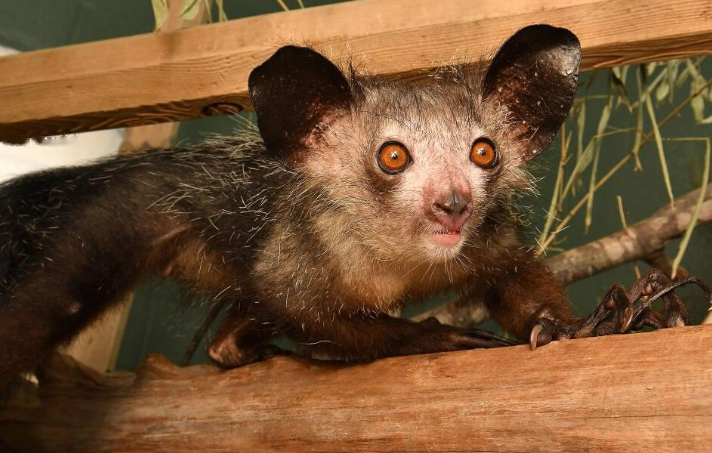
Aye-aye, named for its long fingers and toes. It mainly lives on large branches or tree trunks in tropical rain forests, and usually comes out at night. So, in addition to the above features, what other features does it have? Let's take a look at it~I. Basic information
【Chinese name】Aye-aye
【Latin name】Daubentonia madagascariensis
【English Name: Aye-aye
【Kingdom】Animal Kingdom
【Domain】Chordates
【Subphylum】Vertebrate Subphylum
【Class】Mammalia
【Subclass】Zeuthera
【Order】Primates
【Family】Aye-aye
[Genus] Aye-aye
[Species] Aye-aye
[Named by] Gmelin
[Named] 1788
II. Main distribution
The aye-aye was mainly distributed in the eastern and northwestern parts of Madagascar before, and was later introduced to Mangabe Island and Lemur Island.
III. Appearance characteristics
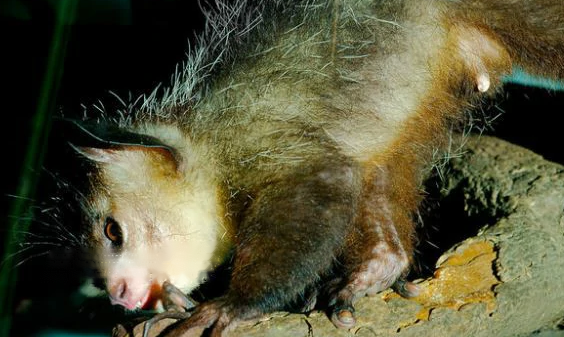
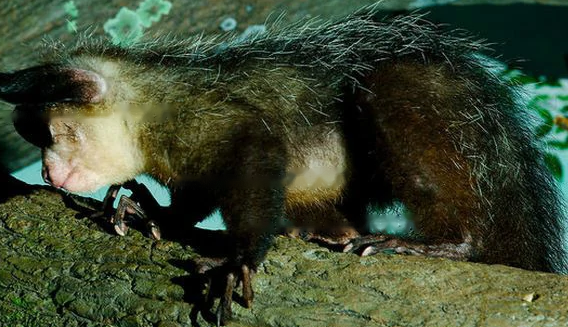
The head of the aye-aye is larger and flatter; the snout is prominent; the ears are larger; the hair on the body is mainly dark brown ; muzzle and lower part of the body are gray-white; face and belly are white; tail hair is thick and dense, broom-like, black or gray.
4. Habits
1. Dietary habits
Aye-aye is an omnivorous animal, mainly eating some insect larvae, small beetles and bird eggs, as well as some fruits.
2. Breeding method
Aye-aye has no fixed breeding season, and the peak of reproduction is in February-March every year. Females reproduce only once every two or three years, with one cub each time.
V. Population Status
The aye-aye is a protected animal and has been recorded in a number of protected lists, as follows:
1. The 2012 Red List of Threatened Species by the International Union for Conservation of Nature (IUCN) is endangered.
2. Washington Convention (CITES), is a class I protected animal.
Okay, the introduction of the aye-aye, Xiaobian said it here! Do you guys understand? If you have anything to say, please leave a message in the comment area~

![[Original] Sharing of popular science knowledge of ringed map turtles](/static/img/11249/11249_1.jpg)