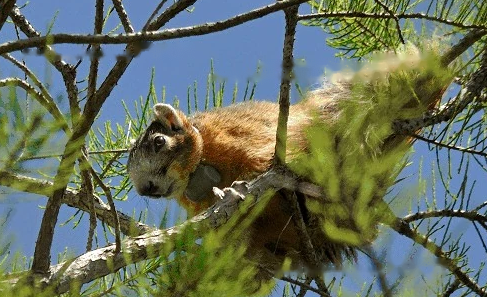
The giant cypress fox squirrel has well-developed senses, seeing, hearing, and smelling well. It is good at climbing and jumping on trees, often looking for food in the woods on both sides of hillsides and river valleys, with agile movements.
So today, the editor will talk about its related information around five aspects.
One 、Basic information
【Chinese name】Big cypress fox squirrel
【Latin name】Sciurus niger avicinnia
【Another name】Mangrove fox Squirrel, Balk's fox squirrel
【Kingdom】Animal Kingdom
【Domain】Chordates
【Subphylum】Vertebrate Subphylum
[Class] Mammalia
[Order] Rodents
[Family] Sciuridae
[Genus] Squirrel
【Species】Fox squirrel
【Named person】A Howell
【Named time】1919
II. Main distribution
The great cypress fox squirrel is found primarily in the pine forests and mangrove swamps of Florida, USA, from Collier County to Cape Sable and the southern tip of Dade County, the peninsula around Biscayne Bay and the east coast of the United States .
III. Appearance characteristics
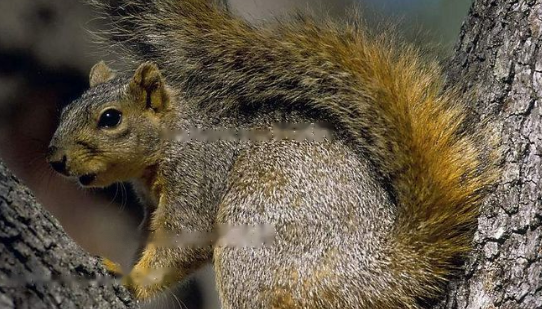
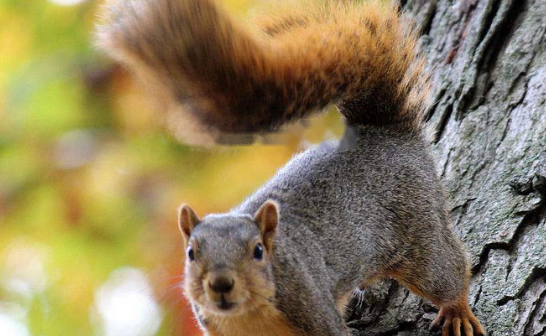
The giant cypress fox squirrel is large and stout; the color of the hair on its body ranges from brown-gray to brown-yellow, and the color changes with the seasons Changes; sharper claws; longer tail.
four , Habits
1. Habitat
The giant cypress fox squirrel mainly lives in sparse forest, under forest vegetation, and may also appear in the branches of large trees in farmland superior.
2. Eating habits
The giant cypress fox squirrel is an omnivorous animal, and its food includes tree buds, insects, ant eggs, bird eggs and tree fruits.
3. Breeding method
The gestation period of female cypress fox squirrels is about 44 to 45 days, and usually produces two litters a year.
V. Protection level
The giant cypress fox squirrel is a protected animal and has been recorded in the World Conservation Union (IUCN) 2012 Endangered Species In the red list, it is a low-risk level.
Okay, big The introduction of the cypress fox squirrel, the editor will stop here! Do you guys understand?

![[Original] Sharing of popular science knowledge of ringed map turtles](/static/img/11249/11249_1.jpg)