When it comes to squirrels, the first impression of many people is that they are petite and cute. Indeed, there are many varieties of squirrels, among which there are many varieties of smaller squirrels, and today I will tell you about one of them—— Red-tailed squirrel.
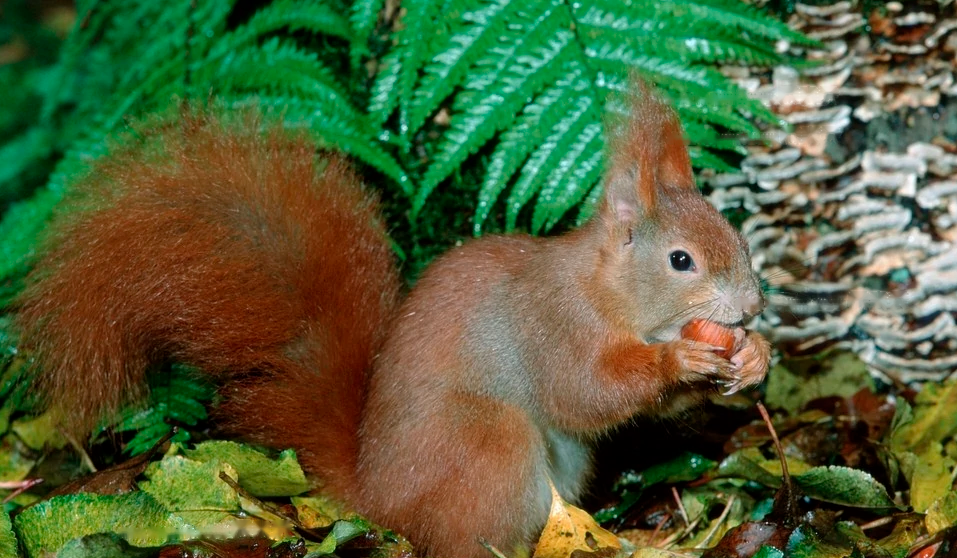
The red-tailed squirrel, also known as the Granada squirrel, is mainly found in Colombia, Costa Rica, Ecuador, Panama, Trinidad, Tobago and Venezuela. It is small in size and has a lively and active personality, so it is very popular among people. However, the red-tailed squirrel is not distributed in China, so many people do not know about it. Don't worry, the editor will give you some popular science about red-tailed squirrels.
I. Basic information
Chinese name: Red-tailed squirrel
Latin name: Sciurus granatensis
Don't Name: Granada Squirrel
Kingdom: Animalia
Named and dated: Humboldt, 1811
2. Morphological characteristics
The red-tailed squirrel is characterized by small size, molars (including front Molars) are 5/4 on each side of the jaw, with 5 upper molars, no skin wings between the front and rear limbs, and a long hairy tail.
III. Living habits
Red-tailed squirrels prefer to live in coniferous forests or mixed broad-leaved forests in the cold temperate zone or sub-cold zone, and are generally herbivorous Sex-based, food is mainly seeds, nuts. Do not hibernate. They mostly forage in forests on hillsides and river valleys. Active during the day, most active in the early morning, good at climbing and jumping on trees, and agile. Usually 1 or 2 more animals are active, but they migrate in groups when food is extremely poor. It builds nests in trees or uses tree holes to live, and has the habit of storing food for the winter. Moult every spring and autumn. Mostly in spring and summer, the estrus period is about two weeks. Litters 2 to 3 times a year, usually more in April and June.
IV. Protection level
The red-tailed squirrel is listed in the International Mammal Red Book of the International Union for Conservation of Nature (IUCN), 2008 list ver 3.1 - Low risk (LC).
Okay, about the red-tailed squirrel, the editor will give you the popular science here today. If you are interested, you can learn more about it.

![[Original] Sharing of popular science knowledge of ringed map turtles](/static/img/11249/11249_1.jpg)