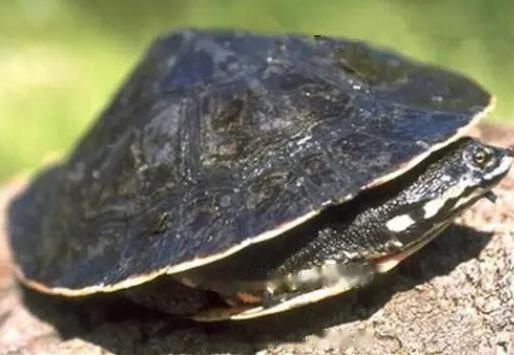
The flower-faced tortoise, also known as the flower-faced tortoise, belongs to the family Plesiosa and the genus toad in the biological classification. It is distributed in South and North America. It has a shy personality and is usually nocturnal. That is to say, it is a A turtle that never likes to bask in the sun, prefers a dark life.
Chinese name : Phrynops geoffroanus
Latin name: Phrynops geoffroanus
Alias: Phrynops geoffroanus
Kingdom: Animalia
Class: Reptiles
Family: Plesiosidae
Genus: Toads
Species: Toad turtle
Distribution: Brazil, Argentina, Colombia.
Morphological characteristics: The carapace is gray-brown, oval in shape, and flat at the top.
Life habit: Toad turtle is the larger one, its carapace can be up to 35 cm long. It is an aquatic turtle and lives in lakes, rivers and swamps rich in aquatic plants.
Food characteristics: Feed on small animals such as small fish, worms and snails. Under artificial feeding conditions, it likes to eat small fish and mixed bait.
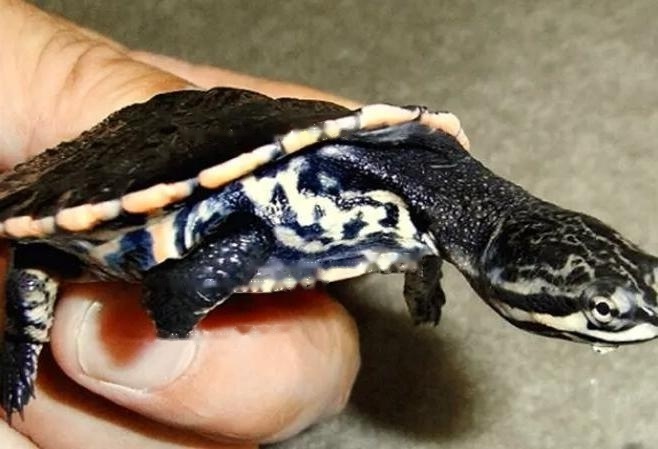
Reproduction methods : Oviparous.
Characteristics of the tortoise
The tortoise is a small aquatic turtle species, usually the color of the carapace is black or dark. The color of the carapace is related to the degree of sunlight exposure, but the carapace of the lace toad does not change due to changes in sunlight, and this is a turtle that does not like to bask in the sun.
The carapace of the flower-faced tortoise is gray-brown, oval in shape, and flat at the top. The plastron is grayish-yellow, without spots on each scutellum, and the inter-larynx shield separates the throat shield, but does not completely separate the humeral shield. The head is wider, the top is gray, flat, with scales, there are 2 light yellow stripes behind the eyes, extending to the back of the top of the head, the throat, neck and abdomen are gray-white, and the mandible has a pair of gray-white antennae. The back and abdomen of the limbs are gray, with well-developed webs between the fingers and toes, 5 claws on the front limbs and 4 claws on the hind limbs. The tail is short.
The carapace of the flower-faced tortoise is small, the maximum adult is only 20cm, and the sex of the adult is easy to distinguish. Usually, the carapace of male turtles is concave, and the tail is longer than that of female turtles. grow bigger.
Care knowledge of toad and turtle with flower face
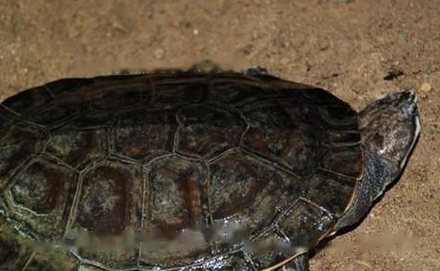
In addition, when raising turtles together, it increases the number of eggs laid. After laying eggs, it hatches. The hatching time of the flower-faced toad turtle is longer, generally 150 to 170 days, and even 200 days to hatch. In general, turtles are gentle and easy to raise and breed. If they don't look a little sloppy, I believe many people like them.
The living environment of the tortoises with flowers
The living environment of the tortoises with flowers should be as large as possible, especially when there are more than one, it is not because the tortoises with flowers will fight, However, it is not easy to clean the water body of the toad turtle, and a large breeding environment can ensure the health of the water body as much as possible.
You can prepare an indoor water tank with a size of 165x125x45cm (length, width and height) for them when rearing the tortoises. This is relative to the situation of 3~4 turtles. a little. Although it is a water turtle, it is impossible to stay in the water all the time, and a piece of land has to be prepared. The land part consists of a 60x40cm box with 23cm thick sand and dirt inside. Between July and November, the water level is lowered to half and the temperature rises to 26-27°C, mimicking the natural dry season and stimulating reproduction.
From December to June, water the sink daily to mimic the natural rainy season. When the water temperature is maintained at 24~25℃. During this period, turtles are still willing to stay in the water most of the time. Turtles can’t do without water, and water can’t do without us. Although it’s okay to change the water every few days in theory, even if you have a filter, it’s not a once-and-for-all matter. It is recommended to change the water once a week. You can add some peat to the water. In this case, the fungal growth will be greatly reduced, and the turtles will not be easy to rot their skins.

![[Original] Sharing of popular science knowledge of ringed map turtles](/static/img/11249/11249_1.jpg)