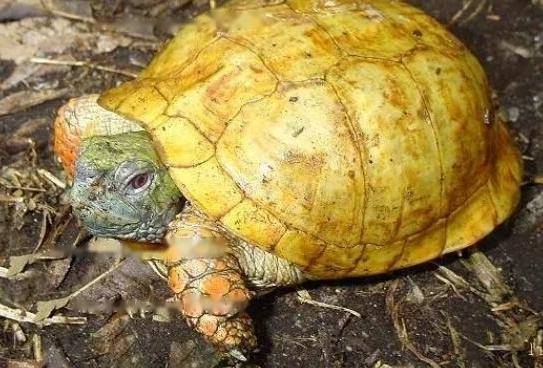
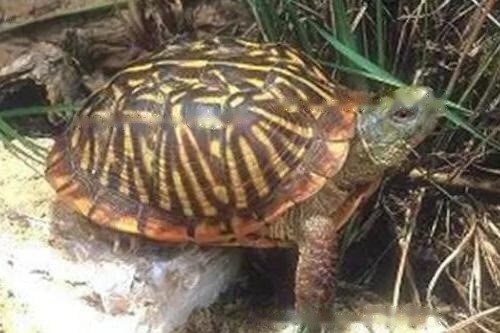
The western box turtle is a special species of the genus Painted Box turtle. It has a brightly colored carapace and lives in the open grassland. It takes five years to reach adulthood. It likes to prey on some insects and occasionally eat some Berries, which are widely distributed, are the more common species of box turtles.
Chinese name: western box turtle
English name: Western Box Turtle
Latin name: Terrapene ornata
Kingdom: Animalia
Phylum: Chordate
Class: Reptiles
Order: Turtles
Family: Turtles
Genus: Golden Box Turtles
Species: Western box turtle
Distribution: Southern South Dakota, Iowa, and eastern Illinois, south to Louisiana and Texas, west to Arizona Southwest. There are separate populations in northwestern Indiana and parts of immediately adjacent Illinois.

Appearance features: The plastron has obvious Movable hinge joint; often as long as the carapace, with a continuous pattern on the scutellum, with yellow radiation. Males have red eyes with slightly invaginated rear plastrons; females have slightly yellowish brown eyes.
Living environment: Mainly open grasslands, but also grazing grasslands, open woodlands, and waterways in dry and barren sandy areas.
Breeding habits: oviparous, each litter Eggs are 2-8, oval in shape, about 1 3/8 (35 mm) long, and have brittle shells.
Diet: Western box turtles are omnivorous, but they are more Turtles tend to be insectivorous, and will occasionally eat fruits and vegetables.

![[Original] Sharing of popular science knowledge of ringed map turtles](/static/img/11249/11249_1.jpg)