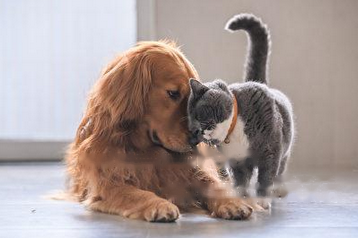
【Global Times Special Correspondent in Australia, New Zealand and Germany Daqiao Guannan Aoki】For many pet owners, the cats and dogs at home are like family members. At a time when the new crown epidemic is raging, owners are faced with a serious and worrying new problem - if one person is quarantined, how should pets be placed? To this end, the World Small Animal Veterinary Association (WASVA) also specially issued Advice to Animal Welfare Organizations during the New Coronary Pandemic. Among them, many good methods are provided. Although some countries differ in their measures, they have the same purpose of being kind to animals.
Australia: Animals can be quarantined with their owners
In 1871, Australia's first Society for the Prevention of Cruelty to Animals (RSPCA) was established in Colonial Victoria. Since then, the Australian states have successively established the Society for the Prevention of Cruelty to Animals, and in 1920 obtained the Royal Certification. Therefore, Australia has always attached great importance to the welfare of animals.
After the outbreak of the new crown epidemic, RSPCA quickly released regulations and recommendations related to animal welfare in epidemic prevention and control on its official website. For example, in the case of self-isolation, pets are allowed to be quarantined together, but the owner needs to prepare pet supplies at least two weeks in advance, including food and medicine. During the quarantine period, both owners and pets should avoid direct contact with others. The RSPCA also recommends that owners prepare prescriptions for the medicines their pets need in advance and write down the instructions so that if the owner is sick or needs to be hospitalized, the information can be passed on to the person who will take care of them. Other suggestions include having tools and transport boxes suitable for transferring your pet, having your pet's vaccination records ready, contact details of the clinic and veterinarian where your pet is usually treated, and an insurance policy.
New Zealand: Do not dispose of pets without the owner's permission
In New Zealand, animal protection is based on the principle of equality between pet owners and others. For example, when residents make an appointment for a door-to-door public service or private service, they are usually asked to provide pet information, including the type of pet, aggression, location, and measures to prevent harm. This preventive measure ensures that the door-to-door service personnel know the pet information in advance, especially in the case of large dogs, to avoid injury. Of course, it is absolutely not allowed in New Zealand to rashly dispose of or harm pets without the owner's permission.
Like Australia, New Zealand's Ministry for Primary Industries issued guidelines on animal welfare during the outbreak soon after the outbreak. If the pet owner is seriously ill or does not have isolation conditions at home, the owner will be sent to a hospital or a centralized isolation facility. Animals can be sent to foster care, shelters or pet hotels. Foster care is not free. If the owner has purchased pet insurance, and the insurance terms allow to pay the fees of the foster care agency, then it can be reimbursed. If you do not have insurance, you will be responsible for your own expenses.
Canada: If the owner is not present, the pet will go to the hotel.
Like New Zealand, the official website of the Canadian government shows that if the owner is infected with the new crown virus and needs to be hospitalized, his pet needs to be temporarily lodged with a veterinarian Living in a clinic, animal shelter, or other residence. At the same time, pets need to be confined to a certain area to minimize contact with other people and animals. Owners should contact a veterinarian immediately if their pet is showing symptoms of COVID-19.
In fact, even before the pandemic, Canadians often sent their pets to animal boarding centres or pet hotels when they were traveling or couldn't care for them. Based on the usual habits, the owner understands the pet's preferences, and even decides which pet hotel is more suitable for the environment and services. During the epidemic, if the owner is unfortunately infected, he can still send his pet to an animal shelter or pet hotel to ensure the health and safety of the owner and pet.
Germany: Pets are rarely tested for the new crown
Last month, a family of three in the apartment building where the Global Times reporter lived was unfortunately infected with the new crown virus. The family was seriously ill and had to be taken to the hospital. Their pets were taken to an animal shelter. European media called these pets corona dogs or corona cats.
Staff at an animal shelter in Berlin told reporters that some coronavirus dogs or coronavirus cats will be weak and have symptoms such as loss of appetite, runny nose, difficulty breathing and diarrhea. If the symptoms are severe, the shelter can contact professional institutions such as local virus research institutes for treatment. Generally speaking, cats and dogs will recover in a short period of time, and it is rare to hear that they die because of this. Shelter staff also said they did not test the pets for the coronavirus. Never asked by a health agency to do this, nor heard of other shelters testing cats and dogs.
Actually, it is rare for pets to be sent to shelters because their owners are quarantined. Because most Europeans and Americans infected with the new coronavirus are taking care of their pets by themselves. According to regulations, if the infected person is mildly ill, they can isolate and recuperate at home. If they want to walk their dog, they can apply for volunteers to come and help walk the dog. Therefore, although European and American countries have been in the epidemic for a long time, the number of infected people has repeatedly hit new highs, but there are few cases where pets are left unattended.

![[Original] Sharing of popular science knowledge of ringed map turtles](/static/img/11249/11249_1.jpg)