A new study published in Nature Communications suggests that the ancestors of many extant animal species may have lived in a shallow water delta in the Chengjiang River in Yunnan, China.
More than 500 million years ago, after the explosion of life in the Cambrian period, many novel species appeared on the earth. The Chengjiang Biota, located in southwestern China's Yunnan Province, is 518 million years old, one of the oldest animal fossil groups known to science, and a key record of the Cambrian explosion.
There, scientists discovered more than 250 fossils, including various worms, arthropods (the ancestors of living shrimp, insects, spiders, scorpions), and even the earliest vertebrates (fish, amphibians, ancestors of reptiles, birds and mammals).
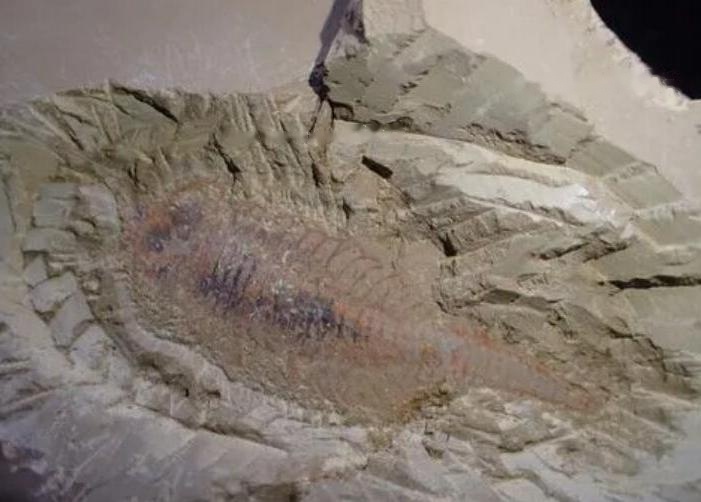
The new study finds for the first time that these species live in a shallow, nutrient-rich delta affected by storm flooding. The area is now on land in the mountainous Yunnan province, but the team studied rock core samples that showed evidence of ocean currents in past environments.
The study's senior author Dr. Ma Xiaoya, a paleontologist at the University of Exeter in the UK and Yunnan University in China, said: It is widely believed that the Cambrian Explosion was a truly rapid evolutionary event. The cause of this event has long been debated, including hypotheses about environmental, genetic, or ecological triggers.
The discovery of the delta environment, the researchers believe, is an important tool for understanding these Cambrian-dominated amphibians. New clues are provided on the possible reasons for the preservation of marine communities and their peculiar soft tissue. Unstable environmental stressors may also contribute to these adaptive outbreaks in early life.
The study showed that the Chengjiang biota mainly lived in an oxygen-rich shallow water delta environment. The gigantic flood brought these creatures to the adjacent deep anoxic environment, resulting in the preserved fossil groups we see today. This is in contrast to earlier research, which suggested that similar fauna should settle in deeper waters, in a more stable marine environment.
The Chengjiang biota, like similar fauna described elsewhere, says study co-author Louis Bouatois, a paleontologist and sedimentologist at the University of Saskatchewan in Canada, Preserved in fine-grained sediments.
The results of this study are important because they demonstrate that most early animals tolerated stressful conditions such as salinity (salt) fluctuations and massive sediment deposition.
This work is the result of an international collaboration between Yunnan University, University of Exeter, UK, University of Saskatchewan, Canada, Chinese Academy of Sciences, University of Lausanne, Switzerland, and University of Leicester, UK.

![[Original] Sharing of popular science knowledge of ringed map turtles](/static/img/11249/11249_1.jpg)