Currently, many people are faced with a rather serious question: if they are quarantined, what will happen to their pets?
This issue is becoming more urgent as the likelihood of us being quarantined has greatly increased in the shadow of the Omicron epidemic. Owners are likely to be safe, as the vast majority of cases are asymptomatic, but pets are increasingly at risk of being killed.
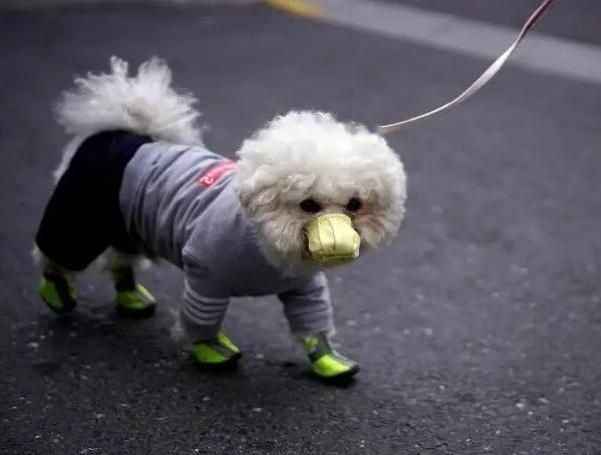
▌Grim Reality: Killing Likely Increased
I saw a red-headed document from Langfang with a very long title and the key word is Urgent Notice on Rapidly Carrying Out the Work of Killing Animals in Indoor Domesticated Animals of Positive Patients. The document clearly states that all territories should actively connect with professional culling of animals and quickly organize household culling work. (Note: After the document was circulated on the Internet on March 30, it was urgently stopped)
This document uses the concept of housed animals rather than pets. It may include chickens and ducks raised by rural people, as well as pets raised by urban and rural residents. As long as a person is found to be positive, indoor animals will be killed.
This should be the first document in China that explicitly requires the killing of pets raised by positive patients.
A document released earlier by Jilin Province also vaguely mentioned this issue. The Notice on Combating Illegal and Criminal Acts Obstructing the Prevention and Control of the New Coronary Pneumonia Epidemic jointly issued by the Judicial Department of Jilin Province lists many criminal and illegal acts that hinder the prevention and control of the epidemic. , control and cull infected animals”.
Jilin's statement is rather ambiguous, because infected animals should refer to animals infected with the virus, and we have not seen pets infected with the new crown (only positive is found on the fur). If the owner is positive, does the pet count as infected? Certification may also be required.
Of course, Jilin's announcement is still disturbing because it equates pets with objects without considering any of its particularities.
This is the latest document. There is no doubt that the policy environment facing pet owners is more dangerous than in 2021. If we say that in 2021 we are facing a situation of nothing to rely on to protect pets, in 2022, killing pets seems to be more legal.
The ambiguity of 2021 is disappearing, but this transparency is heading in a more terrifying direction.
▌Failure in 2021: Failure to form a national standard
The ideal state, of course, is that the owner can bring pets with him when he goes to the hotel for quarantine. This kind of moment of warmth once happened in Shanghai in early 2021. In this round of the epidemic this year, it is hard to have such an extravagant hope.
In 2021, we have seen several news about pet killings.
In Harbin, a citizen who owned a cat tested positive and the cat was euthanized. The owner later complained according to law, and the final explanation of the epidemic prevention department was that the pet had tested positive.
In Shangrao, a pet owner was quarantined in a centralized manner, and the epidemic prevention personnel killed the pet dog, but the video recorded by the surveillance was too brutal, causing an uproar, and the relevant departments finally apologized.
In Pidu District, Chengdu, a couple were tested positive one after another, and their three cats were killed. The matter sparked extensive discussions on the Internet, and finally the local epidemic prevention department communicated with the couple and reached an understanding. It's important to point out that the couple's symptoms were very mild, while their cat was gone forever.
Inquiring about the cases in 2021, we will find that killing pets is basically a measure taken by grassroots epidemic prevention departments without authorization. In Chengdu, after the cat slaughter incident, many citizens called the mayor's hotline to report the problem and found that there was no city-wide unified action.
A district-level epidemic prevention emergency plan I obtained shows that the district document specifically mentions how to house pets if the community is quarantined in a centralized manner. At the end of 2021, Dongyuan of Chengdu University of Technology once became a high-risk area. The community organized volunteers and pet shops to take care of cats and dogs whose owners were quarantined at home.
2021 is both sad and a little gratifying: almost all places where pets are killed, eventually the grassroots or higher-level departments, have expressed apology. Most of these apologies do not admit that the killing itself was wrong, but only admit that the action was too simple and rude, or perfunctory due to public opinion.
This is because there are inherent ambiguities in the law. The legal basis that people who protect pets can find is nothing more than to kill pets, the consent of the municipal department is required, and the execution of the killing is often at the grassroots level, and they cannot come up with orders from the city.
The fundamental legal embarrassment is that China only has laws such as the Wildlife Protection Law, the Animal Epidemic Prevention Law, the Animal Husbandry Law, and the Regulations on the Slaughtering of Live Pigs, but there is no Law on the Protection of Animal Rights and Interests. . Pets (companion animals) do not acquire speciality in law.
Wild animals have a strict grading protection mechanism. Wild boars do great damage, but you can't just destroy them until their numbers disappear from the protection list; while animals and livestocks are It's just a classification of the breeding industry, and people's emotions will not be considered when killing them.
So all the efforts of Chinese pet owners in 2021 can be boiled down to finding a method to protect their pets from the epidemic under a national, unified standard. For example, if a pet is tested positive, the owner tests positive but the pet is not, or the owner is not positive either, it is just a centralized isolation caused by close contact and sub-close contact, how should we treat pets? We need a rigid, unified coping guide.
The epidemic has entered its third year, and we still do not have such a code of operation, which is a pity. We can only hope for some kind of chance, the kindness of the grassroots, the mercy of the epidemic prevention personnel, or the arrangement of volunteers or pet stores to provide appropriate relief.
This suspended state is very disturbing. Many pet owners fall into some kind of fear as a result. It is said that a plan to protect hairy children is to resolutely stay behind and stay with pets when an epidemic occurs in the community. There is also a plan, once you are determined to be centrally isolated, let the cat out, let it become a wild cat, and gain a possibility of escape.
This approach is too sad and does not do any good for epidemic prevention. If the cat does have the virus, it would be irresponsible to release it. The sorrow of pet owners is more of a depression in a defensive state. People really can't find a suitable way and fall into a state of complete helplessness.
The relevant documents in Jilin and Langfang not only deepened this helplessness, but also made the danger clear. In small-scale epidemics, we can still count on the kindness of grassroots epidemic prevention personnel and hope for human empathy, but once the epidemic breaks out on a large scale, who will care about the lives of other people's pets ?
▌Are We Deserving of Civilization
Alan MacFarlane laments in The Birth of the Modern World that England's Animal Rights Act is more pro-child The law was born early. Before recognizing the need to protect children, English people realized the importance of protecting pets, and protected pets, including not only cats and dogs, but also lizards and the like, as long as they become pets, they should be distinguished from animals Come. McFarlane believes that caring for pets is one of the signs that England has entered the modern world first.
Chinese people of course have a long history of keeping pets. However, Chinese civilian households generally keep pets, or from the economic take-off in the 1980s and 1990s.
In big cities, the number of pets has exploded. Because Chinese people in a modern situation also begin to feel the loneliness of modernity. When the epidemic began, the media reported many news that pets accompanied their owners through difficult times. In big cities, many young people don't even want to fall in love, because cats and dogs can provide people with more security.
Of course, browse the news over the past few years and you'll see that the proliferation of pets has created quite a few problems. Stray cats are on the rise, and pet dogs are outraged by biting people, walking their dogs off a leash, or not picking up feces. In our society, there is actually a hatred of pets.
I sometimes suspect that the specific executors who kill pets may be people who hate pets. The epidemic has provided them with an opportunity to vent their anger. In the video of the dog beating in Shangrao, the executor's violent behavior towards the dog caused serious discomfort, which was obvious violence.
In the final analysis, what we face is always this kind of Chinese-style torture: when people can't take care of them, can we still take care of pets? We're good at prioritizing things, and pets are the first victims of an emergency.
The war in Ukraine shows us how it is done in different cultures. Ukraine's economic development level is much worse than China's, and the death caused by war is much more terrible than the new crown virus. However, if you pay attention, you will see many photos of people taking care of pets.
People take their cats and dogs with them when they flee. There was a Ukrainian woman who fled to the border near Poland. She took several dogs with her. The dogs were all disabled, but their owners did not abandon them under the fire. I saw a moving article a few days ago. When Kyiv announced the casualties, it also announced the injuries of the animals in the zoo.
A friend is planning to live in Australia in the summer. Because Australia has listed China as a rabies endemic area, her friend's cat cannot be transported directly from Chengdu. She plans to curve to save the cat and first ask her friend to transport the cat to the Netherlands, where it will be fostered for 6 months, and then received in Australia. .
It's a lot of trouble and a lot of extra money, but she talks about it as peacefully as she talks about her own family—to be reunited with the cat in the fall. She told me that there are many foreigners who worked and lived in China before the epidemic and adopted pets. After the epidemic broke out, they could not be in China and were trying to find volunteers who could bring pets out of the country.
When you're having a hard time, don't abandon it, that may be true love.
This leads me to believe that civilization has some kind of power. Civilized people may be bullied, but civilization is still a worthy goal.
2022 will be tougher for pet owners. We are unreliable and sometimes isolated, everything is uncertain, but you have no choice but to fight - to fight for your cat and dog to the end.

![[Original] Sharing of popular science knowledge of ringed map turtles](/static/img/11249/11249_1.jpg)