While some countries struggle to uphold human rights, Ecuador has forged ahead, ruling that wild animals have unique legal rights, including the right to life.
The 7-2 court ruling in February was a landmark interpretation of the country's natural rights constitution and boosted the legal status of non-human animals.
“In the world, natural rights may sound like a fringe concept, but people don’t realize how mainstream it is around the world.” Kristen Stilt, an expert on animal law ) told Inside Climate News.
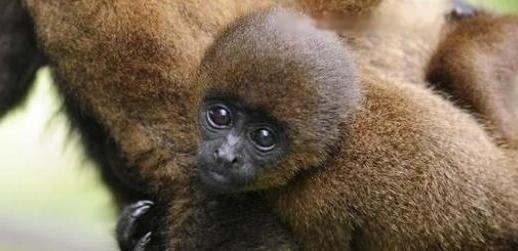
The ruling stems from the tragic case of a woolly monkey named Estrelita. After being illegally taken from the wild, Estrelita lived with librarian Anna Beatriz Bulbano Proano and her family when she was one month old, and was there Lived for 18 years. During this time, she learned to communicate with them through gestures and voice, and acquired family customs.
Estrellita was then seized by local authorities and suffered sudden cardiopulmonary arrest within a month of being transferred to the zoo, where she died.
Before hearing of her death, Burbano filed a lawsuit to get Estrelita back, citing the pain Estrellita may have been going through because of the sudden separation from everything she was familiar with.
The case relies on scientific evidence about the cognitive and social complexity of the woolly monkey (Lagothrix sp.), arguing that Estrelita should have at least the right to physical liberty and that environmental authorities should Specific circumstances to protect Estrelita's rights. Put her in a zoo.
The court ruled that both the authorities and Burbano violated Estrelita's rights, the former for failing to consider her specific needs before relocating her , and the latter was the first to take her out of the wild.
The court proposes drafting new legislation to better uphold these rights in the future.
“The domestication and humanization of wild animals are phenomena that have a significant impact on the maintenance of ecosystems and the balance of nature, as they lead to the gradual decline of animal populations,” the court acknowledged in its ruling.
The decision follows a landmark ruling in Ecuador last year that found mining in protected cloud forests violated natural rights.
Back in 2008, Ecuador became the first country in the world to recognize natural rights at the constitutional level.
Ecuadorian environmental lawyer Hugo Echeverría explained in a statement: While natural rights are enshrined in the constitution, until this decision was made, it was unclear whether individual animals could benefit from natural rights and considered part of nature. The courts have stated that animals are subjects of rights and are protected by natural rights.
Countries such as New Zealand and Canada, as well as other provinces and some cities in the United States, have Treaties, regulations or local laws that provide some similar protections for wildlife. However, countries have not given such rights at the constitutional level, and in many parts of the world, attempts to preserve nature remain life-threatening.
However, the ruling makes it clear that these rights to exist, prosper and evolve fall within the context of ecological processes, which include biological interactions between species, such as predation. They do not equate animals with humans, but still give them the right to freedom in the context of ecological interactions.
This means that hunting, fishing, gathering and forestry are still permitted as long as they are done within other pre-existing laws - for example, not against endangered species - and in a manner that limits suffering way to proceed.
Typically, environmental law doesn't care about animals that are not considered important species, such as endangered species covered by the U.S. Endangered Species Act, Steert said. There is a reckoning that is starting to take place that is breaking down the silos of animal law and environmental law, and this case is an important part of that development.
The bridge between these two fields recognizes that our world is How interconnected. After all, it only takes one unfortunate interaction with wildlife to trigger a pandemic, or destroy a few key individuals, to wipe out an entire vulnerable species.
The climate crisis and the six mass extinctions are intrinsically interconnected, as well as our attitudes and actions toward the lives we share this planet with.
So, in a world where environmental damage now affects so many of us, these laws can help guide us to make better choices as individuals and as a society that benefits us all.
“These laws have proven to be important legal tools for protecting nature, including animals,” Stilt concluded.

![[Original] Sharing of popular science knowledge of ringed map turtles](/static/img/11249/11249_1.jpg)