The study of how humans enjoy alcohol the way we do is an intriguing area of evolutionary science, some believe its roots go back millions of years. One idea is that monkeys are lured to the fermented fruit because of its high nutritional value, and new analysis of urine samples from these so-called drunk monkeys provides the first evidence that they are actually metabolizing the ethanol in them.
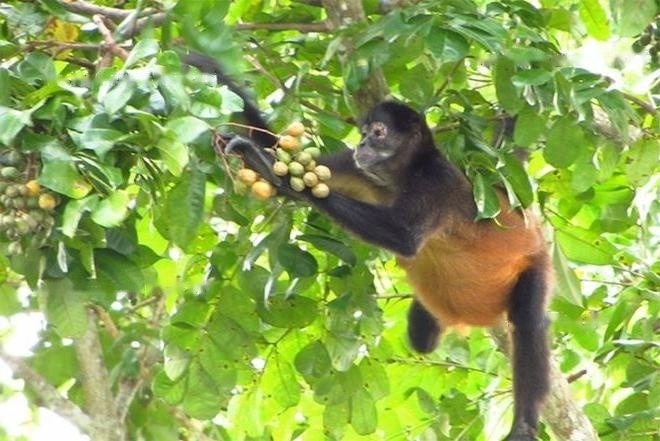
The discovery stems from the long-term work of biologist Robert Dudley, who has been thinking about the relationship between humans and alcohol for more than two decades. In his 2014 book titled Drunk Monkey. Why we drink and binge drink, Dudley put together the argument that humans have inherited their preference for alcohol from primates, pointing to research showing that some of the fermented fruits they eat have naturally high alcohol levels, sometimes as high as 7 percent.
What's missing from the study is data showing that monkeys or apes take precedence over other fruits and that they actually metabolize the alcohol in them. Now, Dudley and biology researchers at UC Berkeley and Cal State University have delved into the drunk monkey hypothesis, turning to Panama's black-handed spider monkeys for answers.
Now, for the first time, we have been able to show unequivocally that wild primates eat ethanol-containing fruit without human interference.
Scientists collected fermented fruit eaten and discarded by the monkeys and found that they typically contained 1 to 2 percent alcohol concentration. They went a step further and collected urine samples from wild monkeys and found the presence of metabolites that digest alcohol, suggesting they were actually using alcohol for energy.
Dudley said: This (this study) is a direct test of the drunk monkey hypothesis. In the first part, they ate food that contained ethanol, and they ate a lot of fruit. Then, in the second part, they Actually metabolizing alcohol - secondary metabolites, ethyl glucuronate and ethyl sulfate are excreted in the urine. What we don't know is how much they eat and what are the behavioral and physiological effects. But this is confirmation Sex.
Monkeys are less likely to feel the effects of alcohol, scientists say. The idea was that they would seek out fermented fruit because it has a higher caloric concentration, which equates to more energy. The fruit from the Jobo tree has also been used by indigenous peoples for thousands of years to make an alcoholic beverage called chicha. Scientists believe that, like monkeys, our ancestors were lured to eat this fermented fruit because of its higher calorie content.
Christina Campbell, who led the study, said: For the first time, we have been able to show unambiguously that wild primates eat fruit containing ethanol without human interference. This is just One study, more research needs to be done, but it looks like the 'drunk monkey' hypothesis may have some truth -- the tendency for humans to consume alcohol stems from a thrifty (fruit-eating) primate's response to the naturally occurring effects of ripe fruit. Ethanol has a deep-rooted affinity.

![[Original] Sharing of popular science knowledge of ringed map turtles](/static/img/11249/11249_1.jpg)