Reference News Network reported on April 24 According to the Nihon Keizai Shimbun report on April 6, the pet technology that effectively uses data and technology to protect the health of pets is gradually emerging. RABO Corporation, a start-up based in Shibuya-ku, Tokyo, raised about 1.3 billion yen (about 10.28 million U.S. dollars) to expand sales of excretion information recording equipment for disease prevention. In order to develop this market with growth potential, Sharp and other large enterprises have also participated, and the competition has become increasingly fierce.
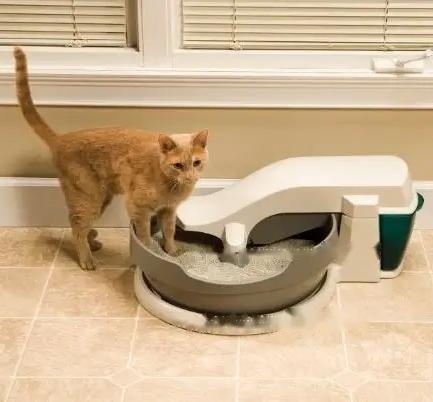
The amount of urine appears to have increased and a health check is recommended. RABO is in charge of the Catlog Board weight scale business. Put the Catlog Board under the cat toilet, record the amount and frequency of excretion, etc., and send notifications to the cat owner's APP, so that the cat owner can detect the changes in the pet's body in time.
RABO also sells collar-style devices that record pet behavior, the report said. If your cat drinks more frequently and urinates more frequently, a problem with the urinary system may be suspected. According to Atsushi Ogawa, who holds a veterinary certificate from RABO, cats have weak kidneys and urinary systems, and most of the causes of death are chronic renal failure.
Recently, RABO reportedly raised about 1.3 billion yen from Unicharm Group, which sells pet supplies, and venture capital firms. In terms of business, RABO also cooperates with Unicharm. RABO has data on about 15,000 pets, which is conducive to the development of new pet toilets and pet food.
The report said RABO is also working with animal hospitals. Company representative Yiyu Yuyunzi said: We will work with dozens of hospitals to study how to use cat's life data for diagnosis and treatment.
According to the forecast of the US Global Market Insights consulting company, the global pet technology The market will grow to about 2.5 trillion yen in 2028, about four times as much as in 2021. This promising market is also gaining attention from big players, with Sharp also selling cat toilets with weights.
The report pointed out that Toleta Pet Cat Products Co., Ltd., located in Fujisawa City, Kanagawa Prefecture, has developed cat toilets with both weight scale and camera functions, and also cooperated with animal hospitals.
The service that the company has been offering since the end of March reportedly is to automatically share data in the form of emails with logged-in animal hospitals, veterinarians, etc., when indicators such as pet cat urine output change.
One of the advantages is that there are cameras installed in the cat toilets, the report said. In addition to being able to detect abnormal cat behavior, cat owners can be more at ease by watching videos. The company aims to enter the U.S. market by February 2023.
The report pointed out that pet technology services are not limited to cats. Tokyo's Chuo-ku-based company Voice of Pets also provides dogs with neck-worn devices that record the number of times they eat and drink. The Lange Valles company in Minato-ku, Tokyo has developed a wearable device called Inupathy that can analyze the heartbeat status of dogs. The company is also collaborating with a number of universities, such as with Okayama University of Science on how to calm a dog's heartbeat.
According to the Japan Pet Food Association in Chiyoda-ku, Tokyo, the number of cats in Japan is about 9 million, while the number of cats in the United States is about 10 times that. For emerging pet tech companies, a business strategy with an eye toward going overseas is key to accelerating growth.
According to Japan's Yomiuri Shimbun report on February 23, due to the new crown epidemic, people are staying in their homes for longer, and the number of people who raise cats to heal their mood is also increasing. Now, with daily necessities manufacturers as the center, there has been a trend of looking for business opportunities around cats, and it is estimated that cat economics will bring economic benefits of nearly 2 trillion yen.
It is reported that Japan's Fong Shin, which is engaged in the production of insecticides and deodorants, joined the pet supplies business on the 22nd. The first product released was a cat toilet, in which the company added deodorant ingredients extracted from the linden tree to cat litter and mats. Although the company entered the pet products market late, it will strive to occupy 10% of the market share of related products in five years.
The report pointed out that if pets are kept indoors, many families will mind the smell of pet excrement, so deodorant-related products have become the main battlefield of various manufacturers.
According to reports, Unicharm Group, which mainly focuses on diapers and high-end physiological products, has a very good performance. The pet health segment, which leverages nonwoven and absorbent technologies, saw sales through December 2021 rise 9% from a year earlier.
It is reported that Unicharm not only produces paper pads for cats, but also cat treats that are packaged in the shape of a spoon and are easy to feed. Unicharm is focusing on increasing the variety of products. The general manager of the group, Haojiu Gao, pointed out: The sales of the pet business exceeded the 100 billion yen mark for the first time. With profitability, it is the cat-related field that has become the driving force. The group will not only sell in Japan , and will also expand related business abroad.
According to the Japan Pet Food Association, about 16 million pet dogs and cats will be raised in Japan in 2021. The number of pet dogs is about 7.1 million, showing a decreasing trend; while the number of pet cats is about 8.9 million, showing a gradual increase. This is because under the new crown epidemic, more and more people have started to keep cats in order to increase communication within the family.
According to the research firm Fuji Keizai, the domestic market for pet-related products will reach 503.4 billion yen in 2020. By 2023, this market is expected to grow by 7.9% compared to 2020.
It is reported that Katsuhiro Miyamoto, an emeritus professor at Kansai University, used cat economics to describe the economic benefits brought by cats in 2022, predicting that it could reach as much as 1.96 trillion yen. The cost of raising cats plus spending on peripheral products such as cat cafes and photobooks will increase.

![[Original] Sharing of popular science knowledge of ringed map turtles](/static/img/11249/11249_1.jpg)